Fossil Lake, Wyoming · 52 million years ago
Meet the plants and animals of Fossil Lake
Picture Wyoming 52 million years ago. Instead of dry sagebrush hills there was a warm lake, with palm trees on its shores and a climate much like the Gulf Coast of the United States today. Schools of little herring swam through the water, and giant gars as long as a grown-up is tall hunted smaller fish. Crocodile relatives, turtles, birds and bats lived there too.
Deep down, the water had so little oxygen that nothing ate the fish that sank to the bottom. They were buried in soft lime mud, one thin layer at a time, which is why so many Fossil Lake fish are found whole. Using what scientists have learned from those fossils, we rebuilt 31 of the lake's plants and animals in 3D, at their real size. Tap a picture to spin it around.
- 52 millionyears ago
- 31plants and animals in 3D
- 25 mtallest: pine
- 3.05 mlongest animal: Borealosuchus wilsoni
- 4.3 cmsmallest: floating fern
Animals 16
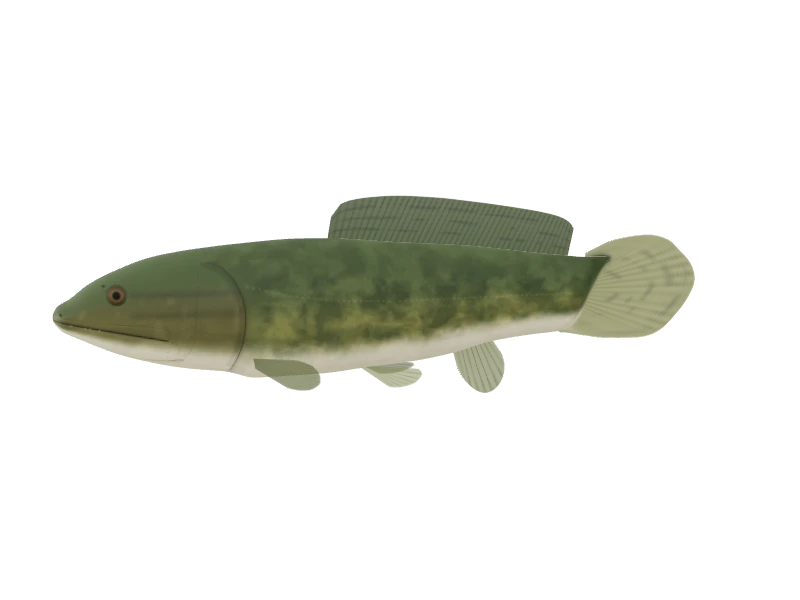 View in 3D: Amia pattersoni
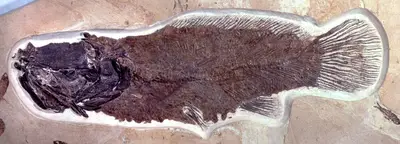
A real bowfin fossil 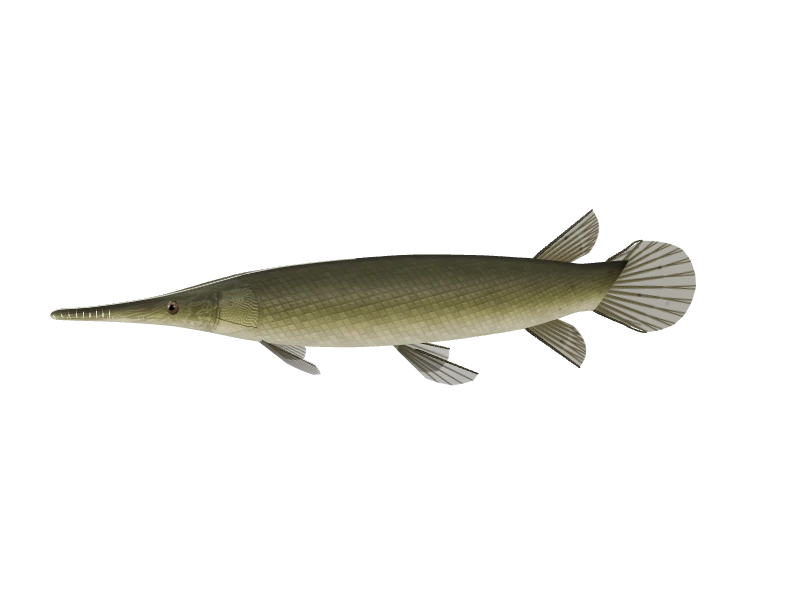 View in 3D: Atractosteus atrox
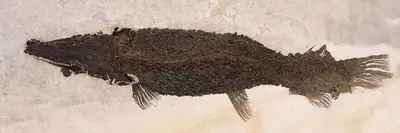
A real giant gar fossil, 2 m (6.5 ft) long 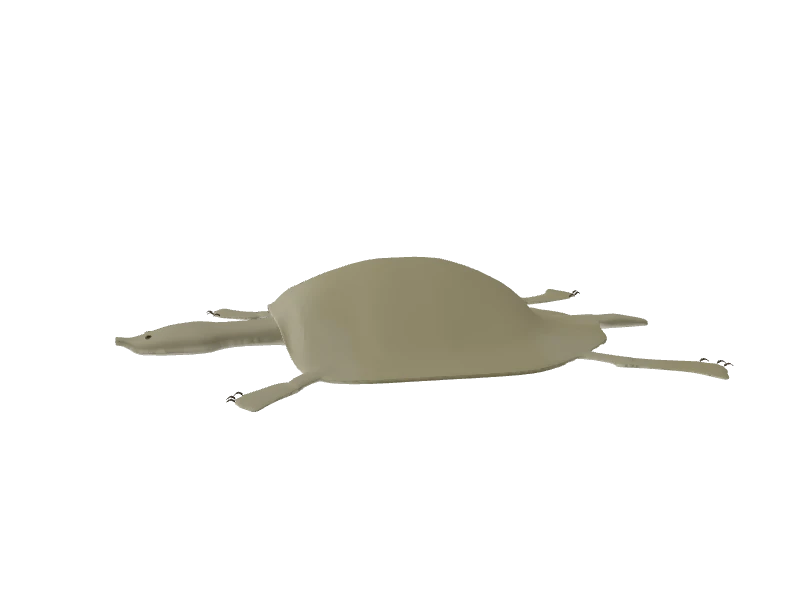 View in 3D: Axestemys sp.
No photo of this fossil can be shared yet
Axestemys sp.Giant softshell turtle (Trionychidae)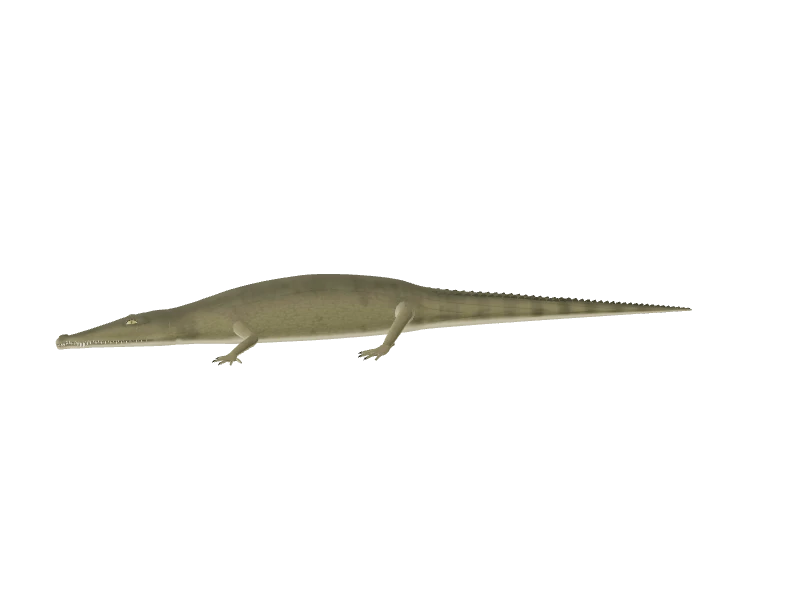 View in 3D: Borealosuchus wilsoni
No photo of this fossil can be shared yet
Borealosuchus wilsoniBasal eusuchian at or near the base of Crocodylia (neither true crocodile nor alligator); apex predator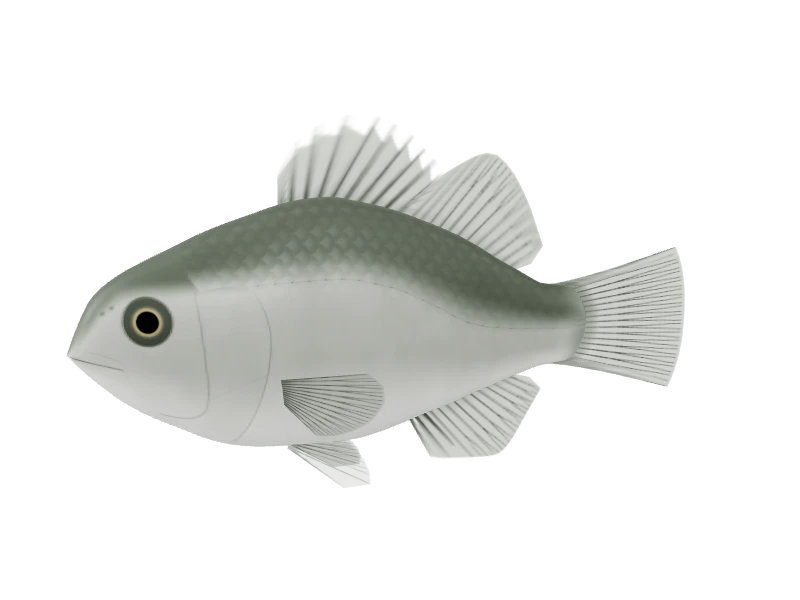 View in 3D: Cockerellites liops
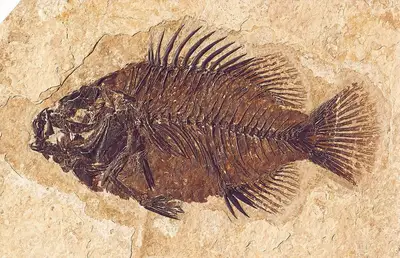
A real fossil of this little perch 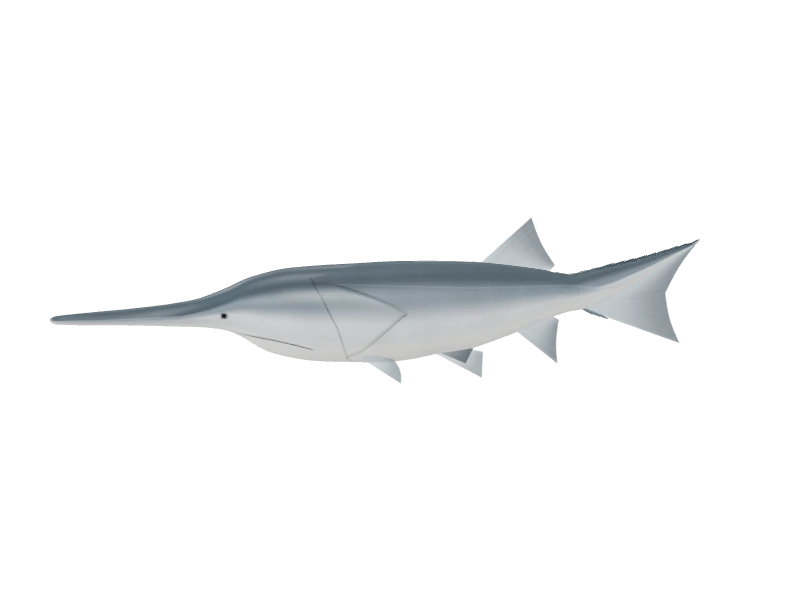 View in 3D: Crossopholis magnicaudatus
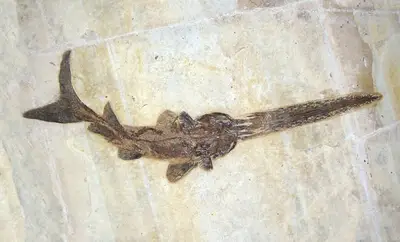
A real paddlefish fossil 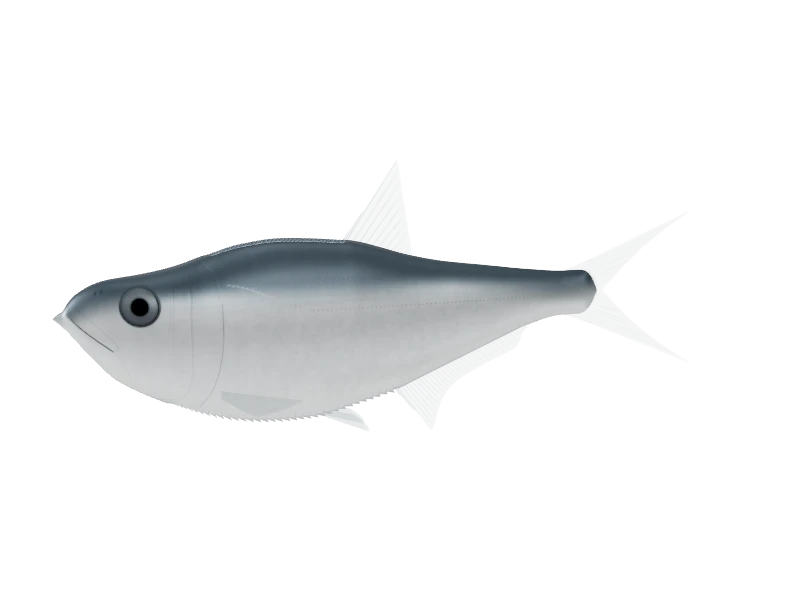 View in 3D: Diplomystus dentatus
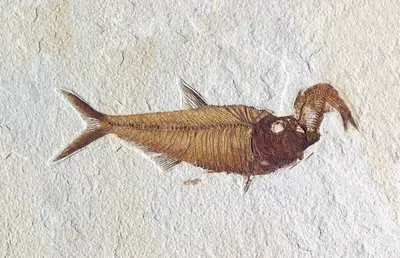
A fossil with a herring stuck in its mouth 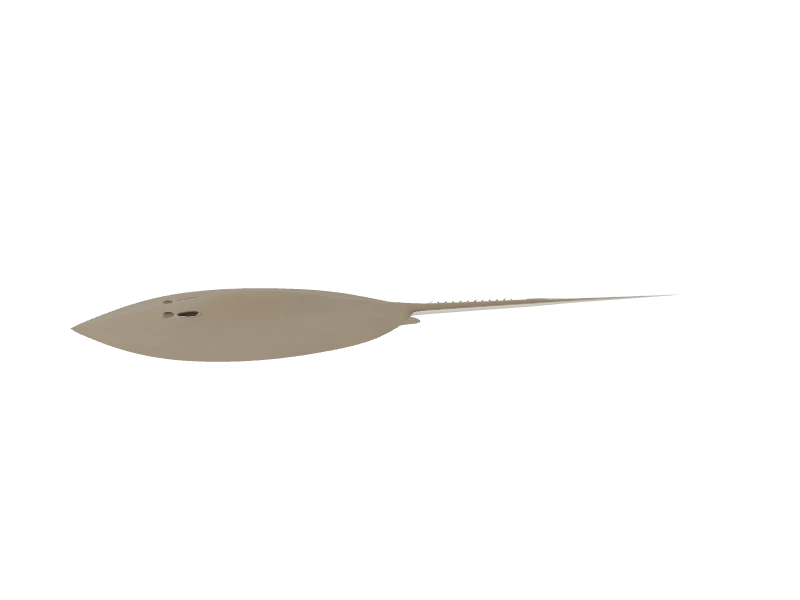 View in 3D: Heliobatis radians
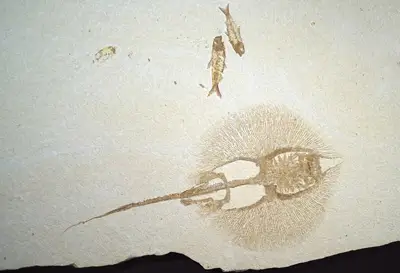
A real stingray fossil from Fossil Lake 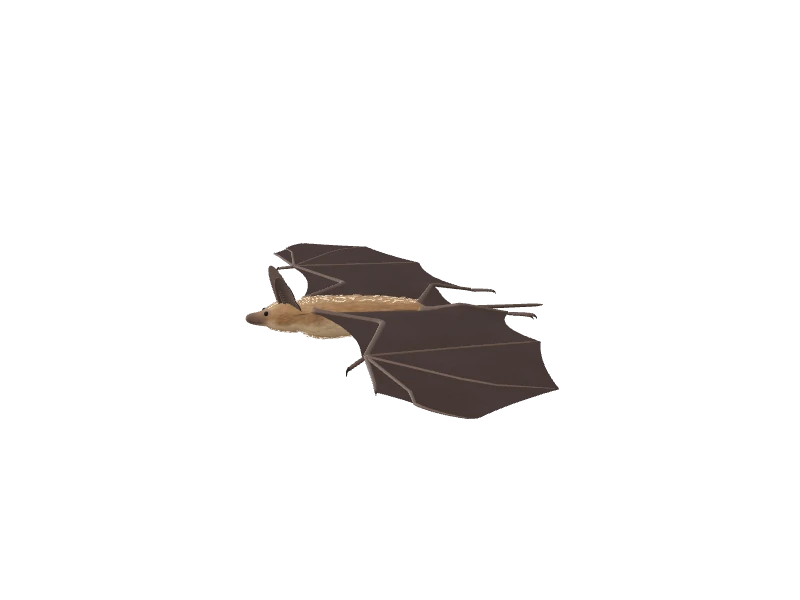 View in 3D: Icaronycteris index
No photo of this fossil can be shared yet
Icaronycteris indexEarly bat (Icaronycteridae) with a long tail; claws on thumb and index finger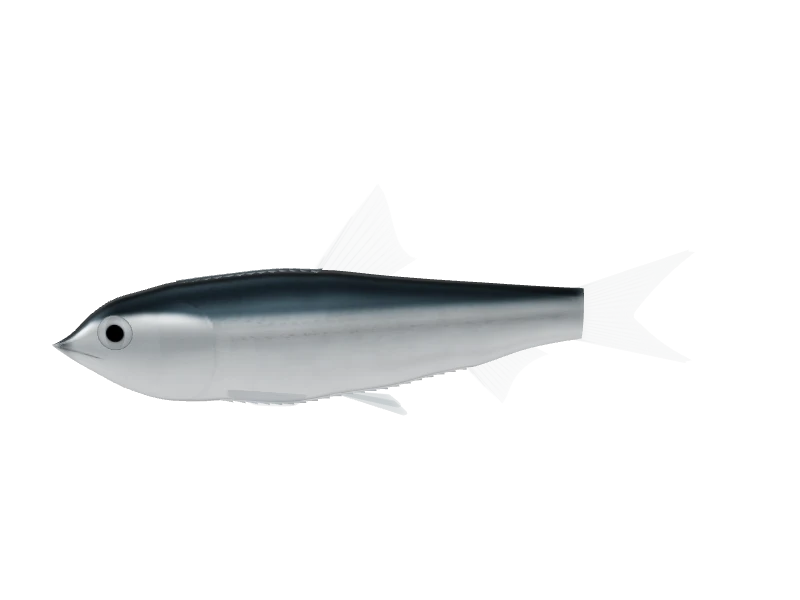 View in 3D: Knightia eocaena
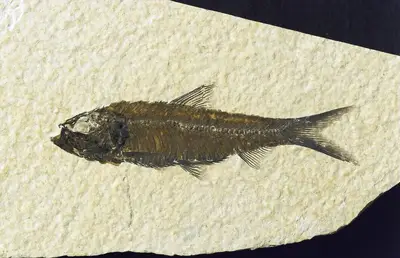
A real Knightia fossil 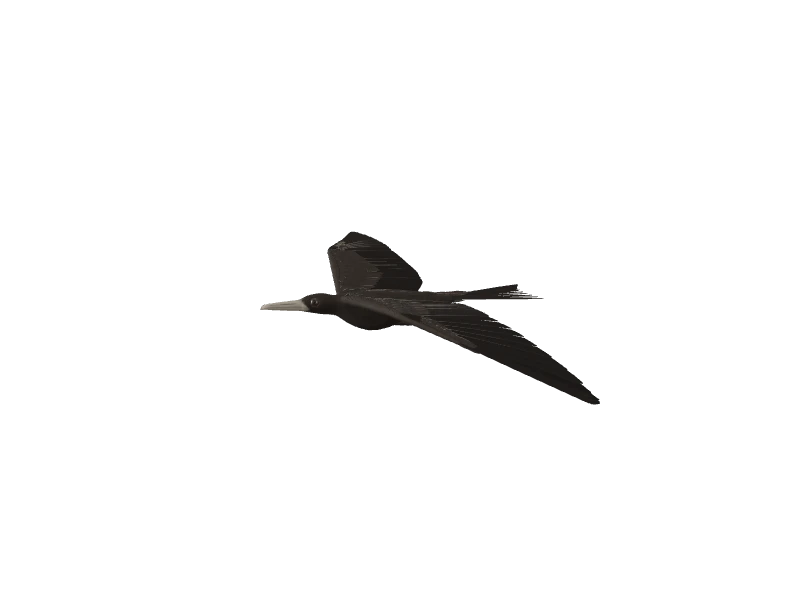 View in 3D: Limnofregata azygosternon
No photo of this fossil can be shared yet
Limnofregata azygosternonLake frigatebird: shorter wings, longer legs (webbed feet assumed) and straighter bill than modern frigatebirds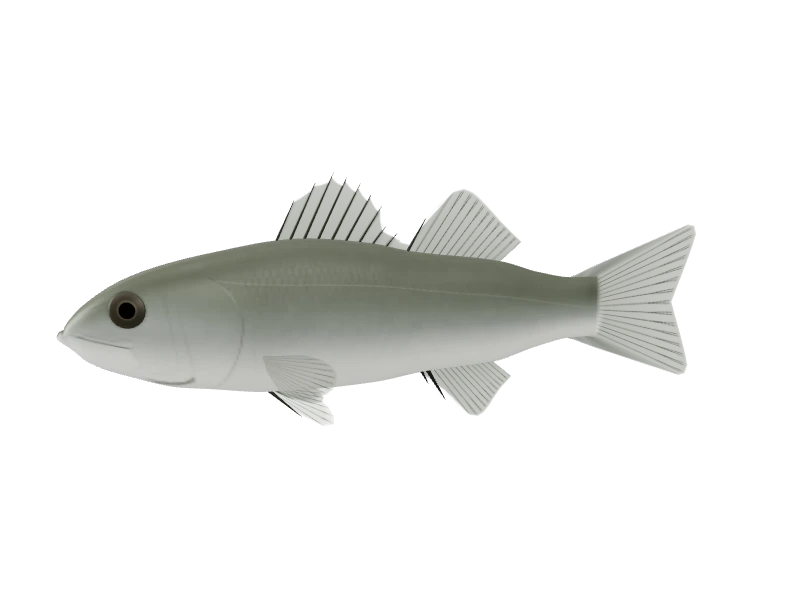 View in 3D: Mioplosus labracoides
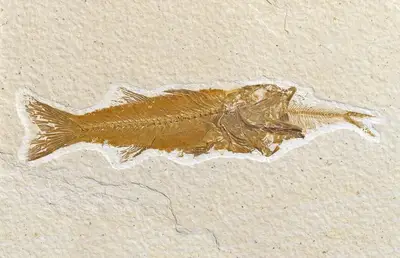
A fossil caught swallowing a herring cousin 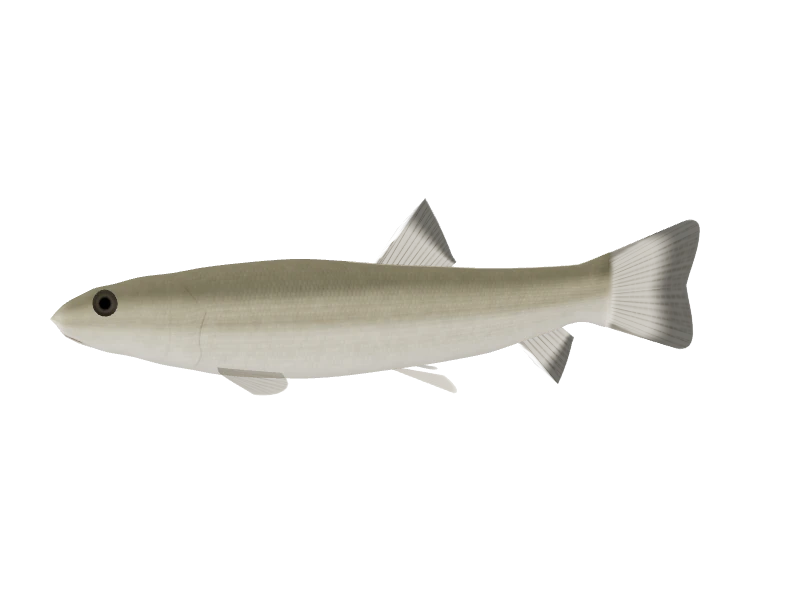 View in 3D: Notogoneus osculus
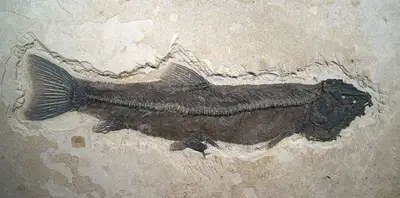
A real beaked sandfish fossil 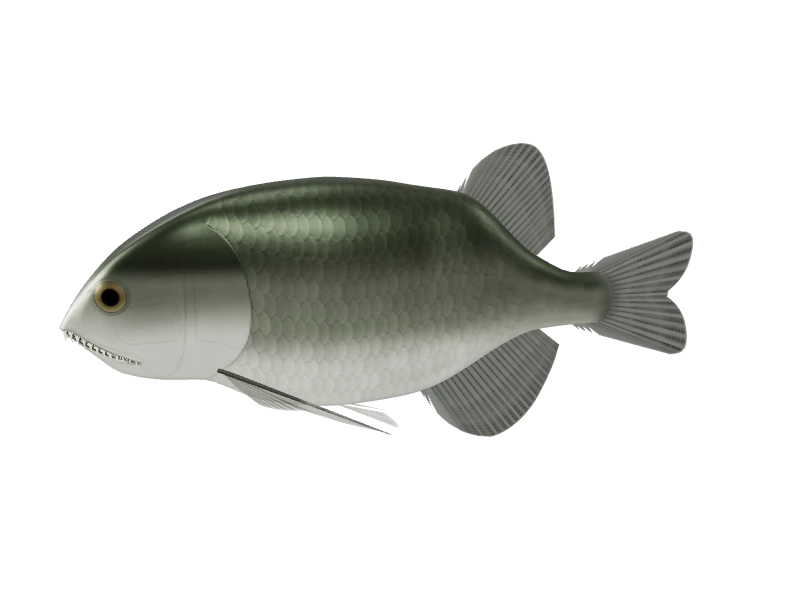 View in 3D: Phareodus encaustus
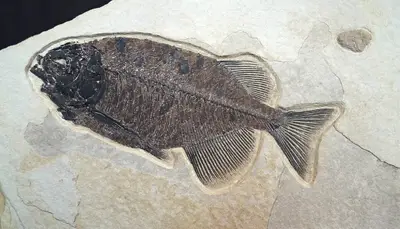
A real bonytongue fossil 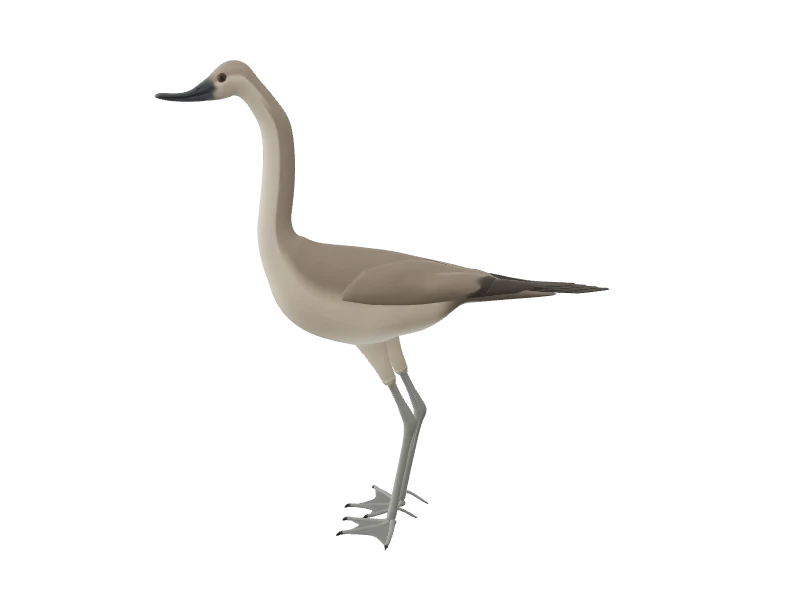 View in 3D: Presbyornis pervetus
No photo of this fossil can be shared yet
Presbyornis pervetusDuck-headed, long-legged shorebird-like waterfowl (Presbyornithidae)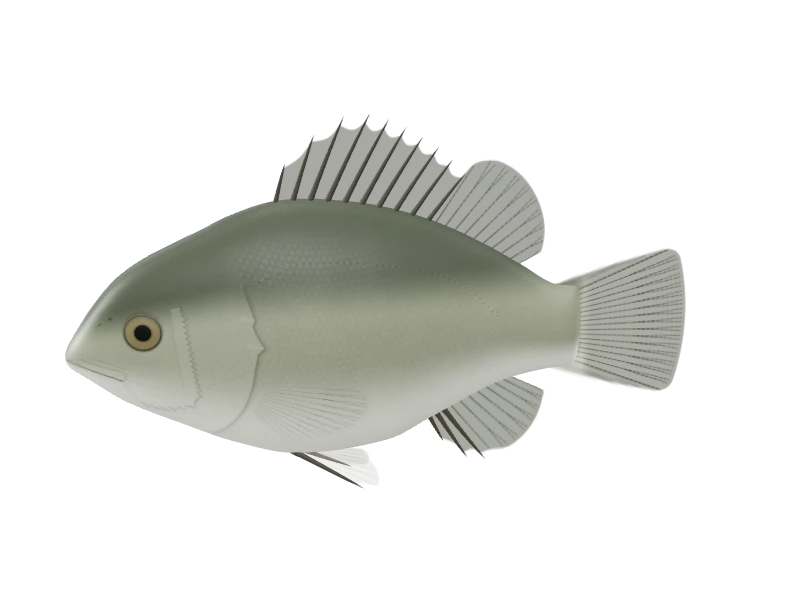 View in 3D: Priscacara serrata
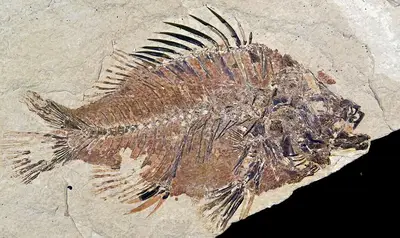
A real spiny perch fossil
Plants 15
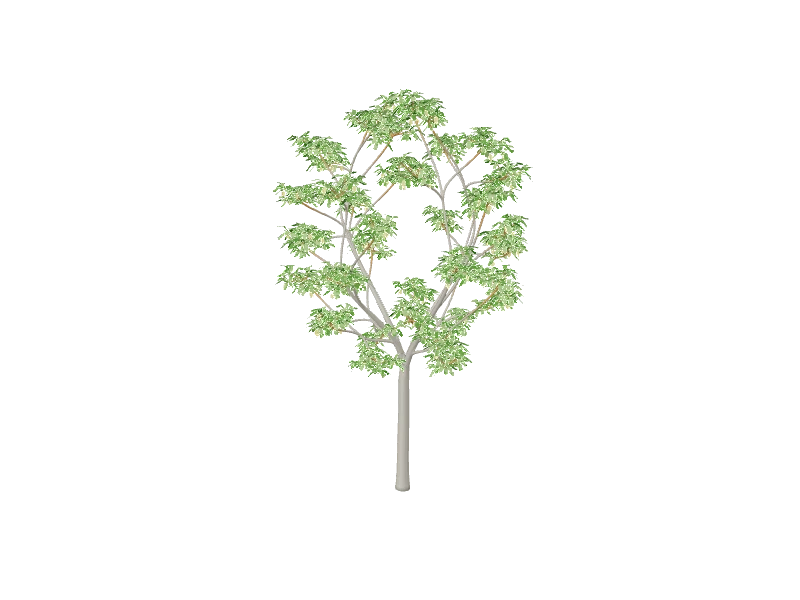 View in 3D: Ailanthus confucii
No photo of this fossil can be shared yet
Ailanthus confuciitree-of-heaven (winged samaras with central seed)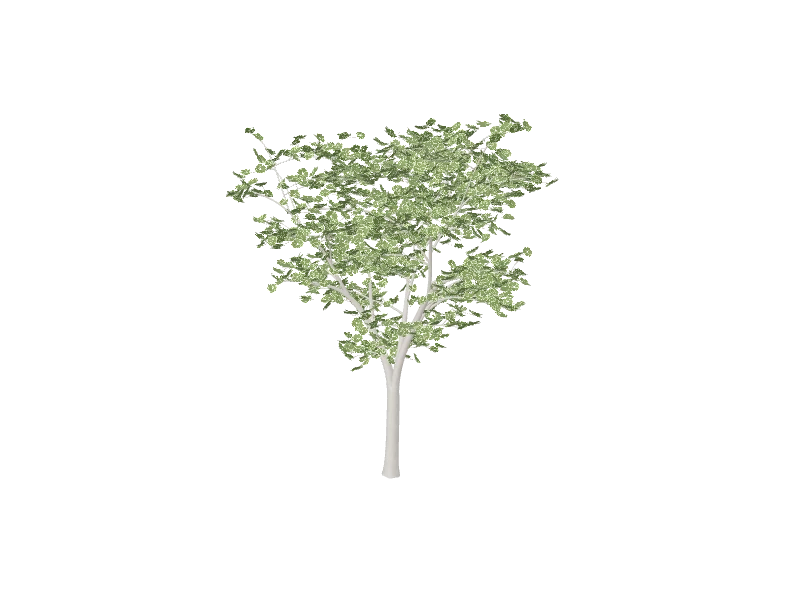 View in 3D: Arcoa lindgreni
No photo of this fossil can be shared yet
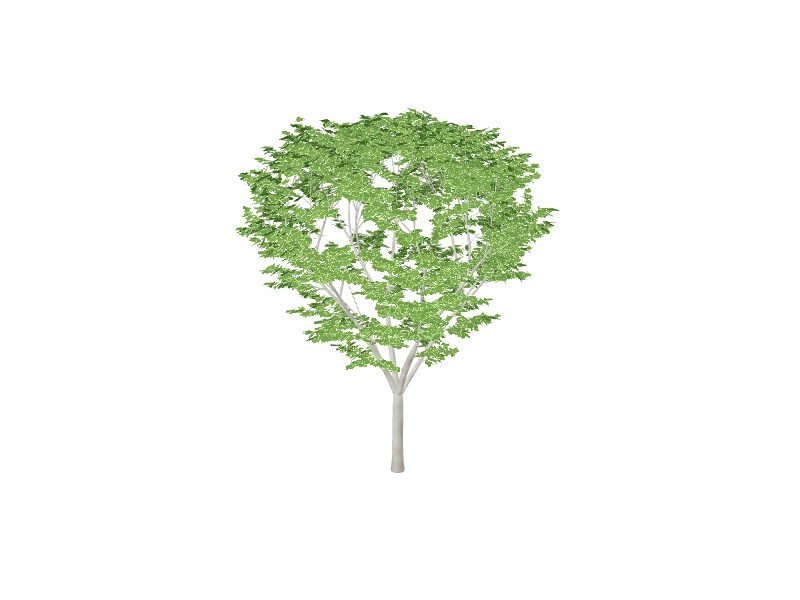 View in 3D: Cedrelospermum nervosum
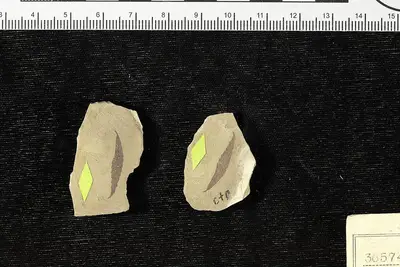
A real fossil leaf, found in Utah (Lake Uinta) 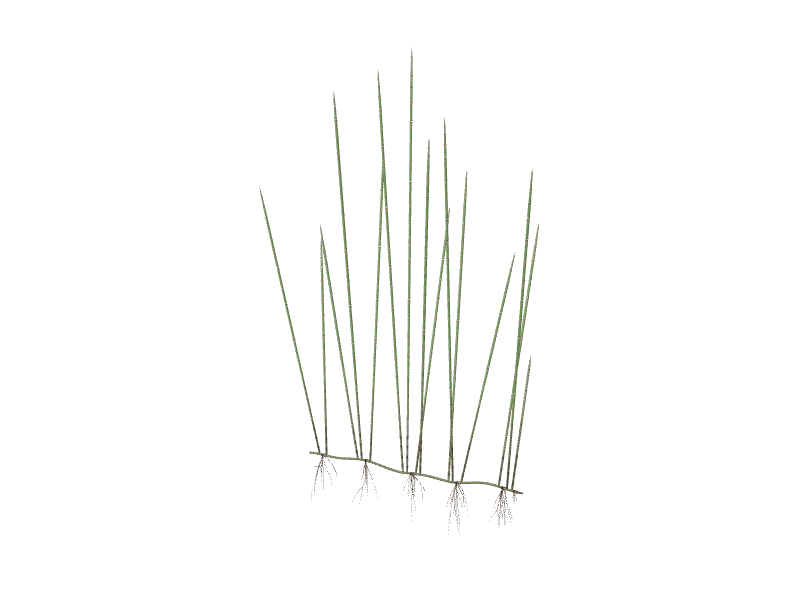 View in 3D: Equisetum sp.
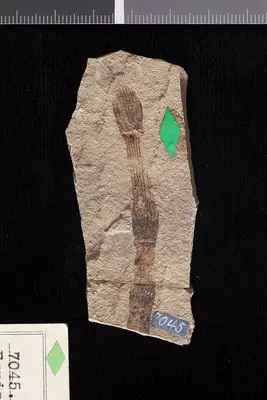
A related fossil horsetail from near Green River, Wyoming 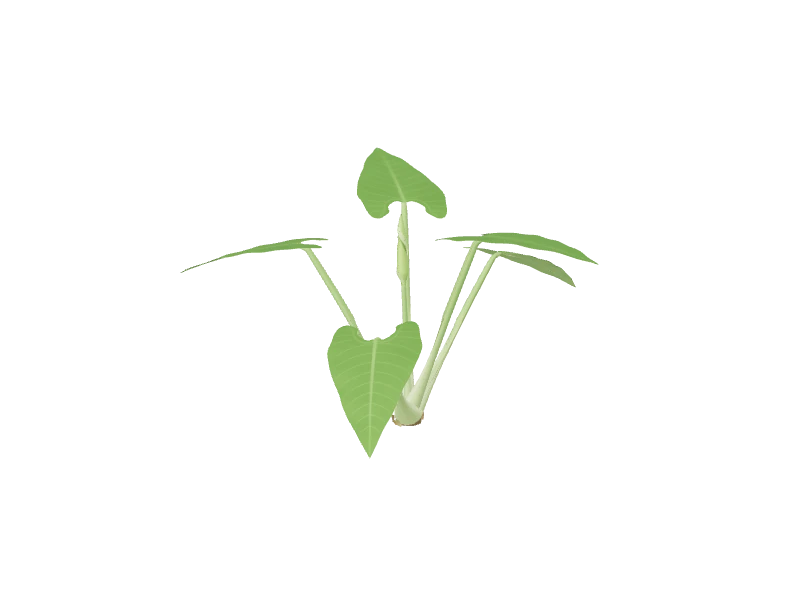 View in 3D: Gigantosagittata graingeriana
No photo of this fossil can be shared yet
Gigantosagittata graingerianagiant aroid ('elephant ear'), herb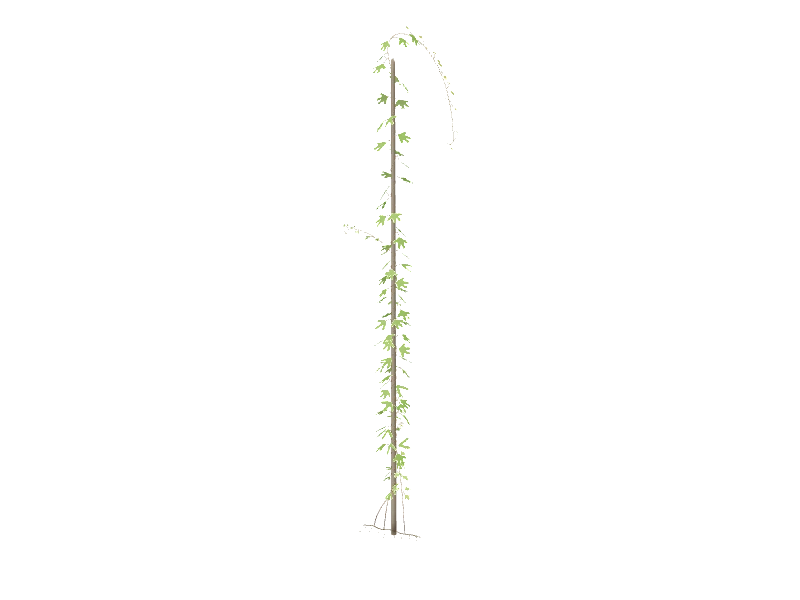 View in 3D: Lygodium kaulfussi
No photo of this fossil can be shared yet
Lygodium kaulfussiclimbing fern (twining fronds)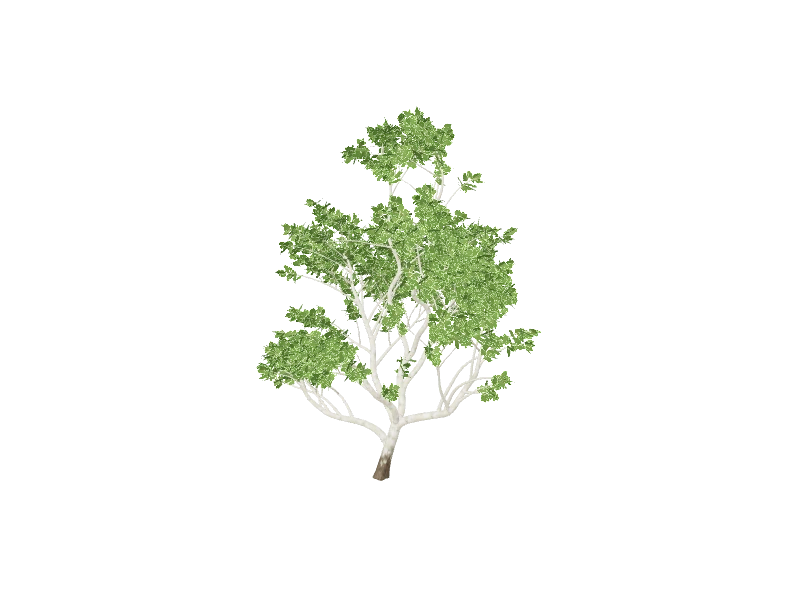 View in 3D: Macginitiea wyomingensis
No photo of this fossil can be shared yet
Macginitiea wyomingensisplane tree / sycamore relative, large tree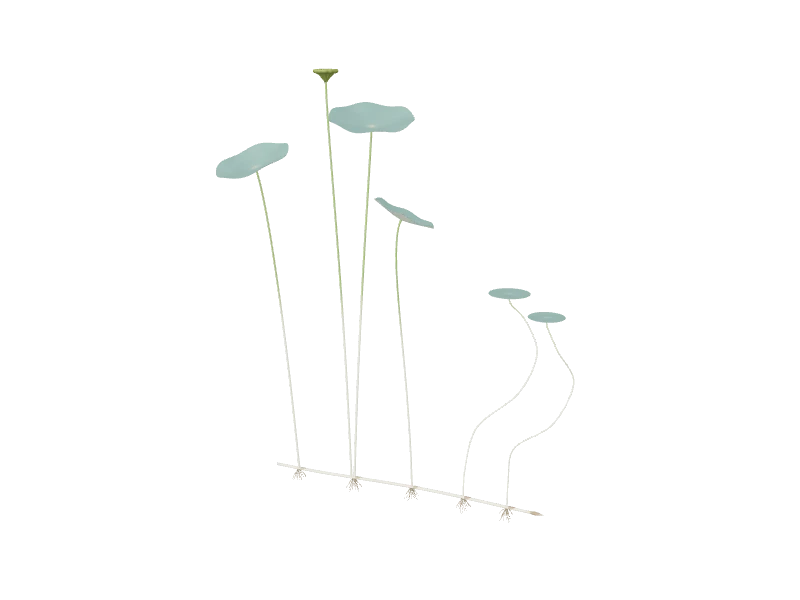 View in 3D: Nelumbo sp.
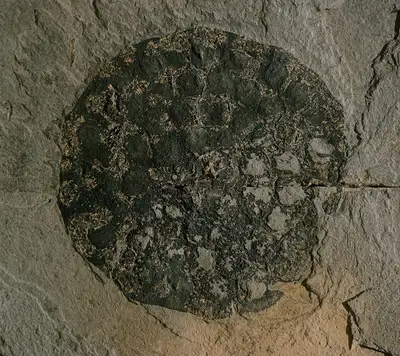
A fossil lotus seed pod from Fossil Lake 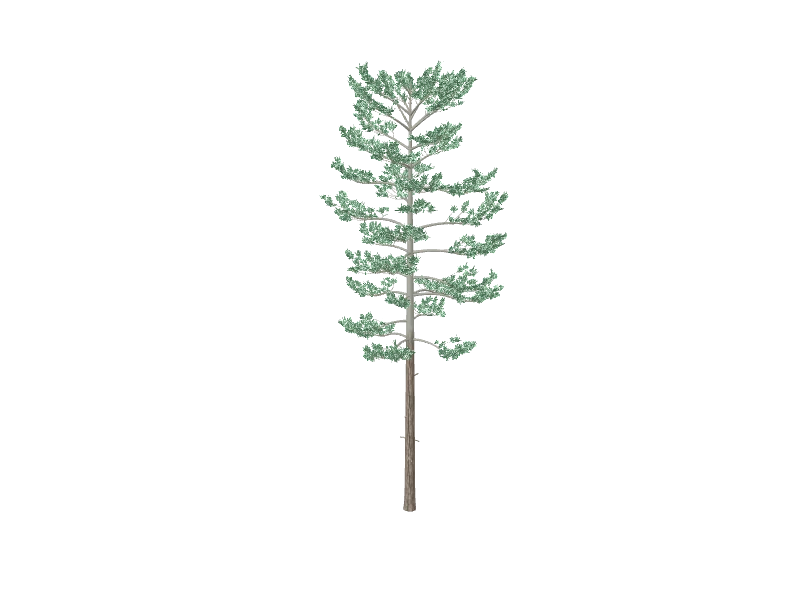 View in 3D: Pinus sp.
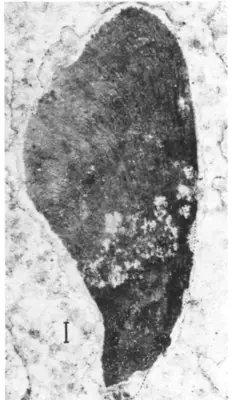
A fossil pine seed and its wing from Fossil Lake, about 2 cm long 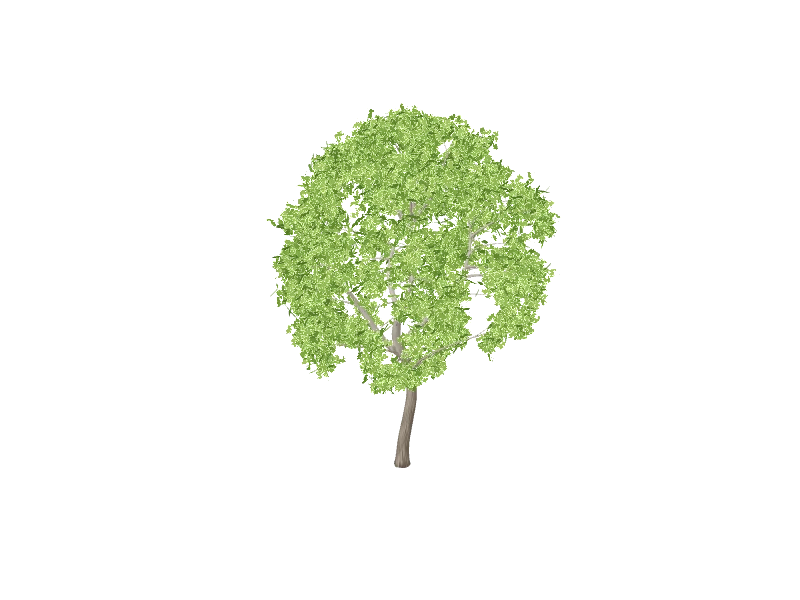 View in 3D: Populus cinnamomoides
No photo of this fossil can be shared yet
Populus cinnamomoidespoplar / cottonwood, tree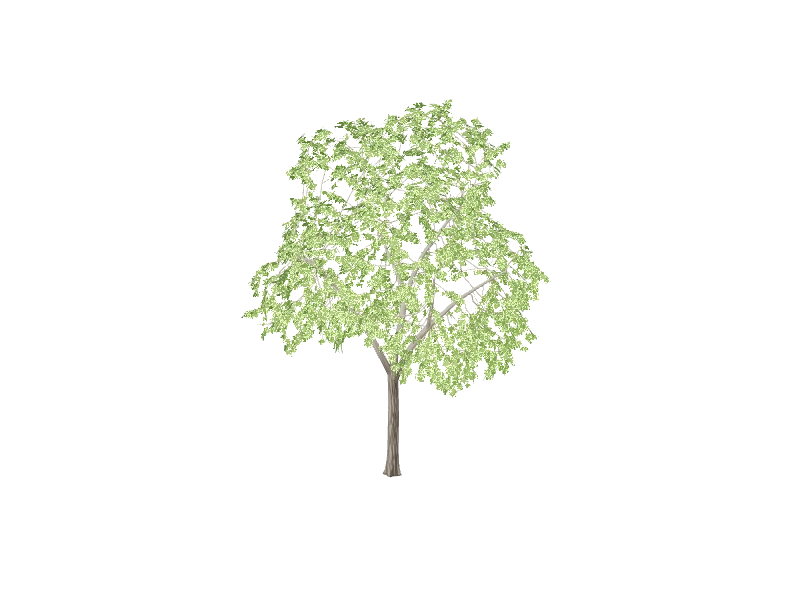 View in 3D: Populus wilmattae
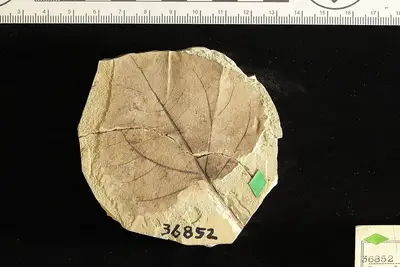
A real fossil leaf, found in Utah (Lake Uinta) 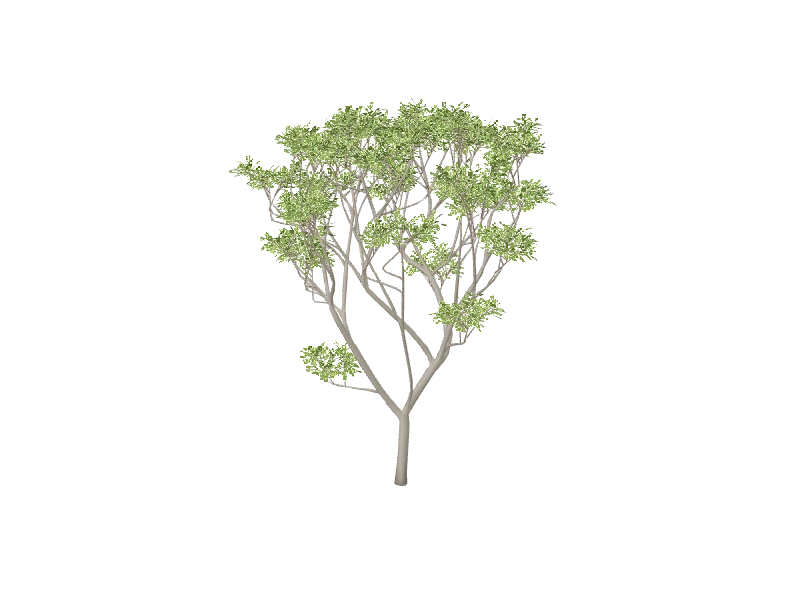 View in 3D: Rhus nigricans
No photo of this fossil can be shared yet
Rhus nigricanssumac-like shrub or tree (Anacardiaceae)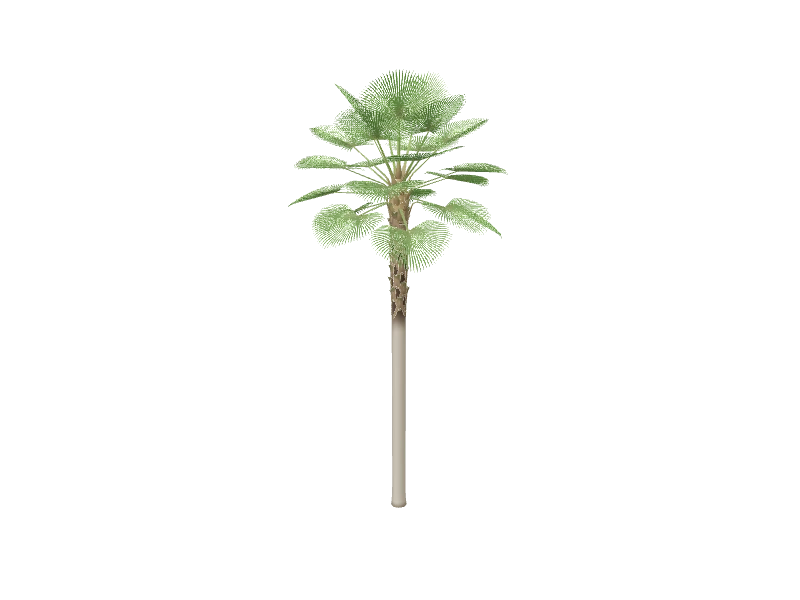 View in 3D: Sabalites sp.
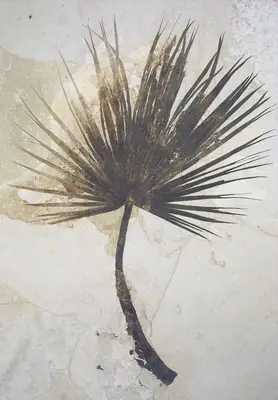
A fossil palm leaf from Fossil Lake 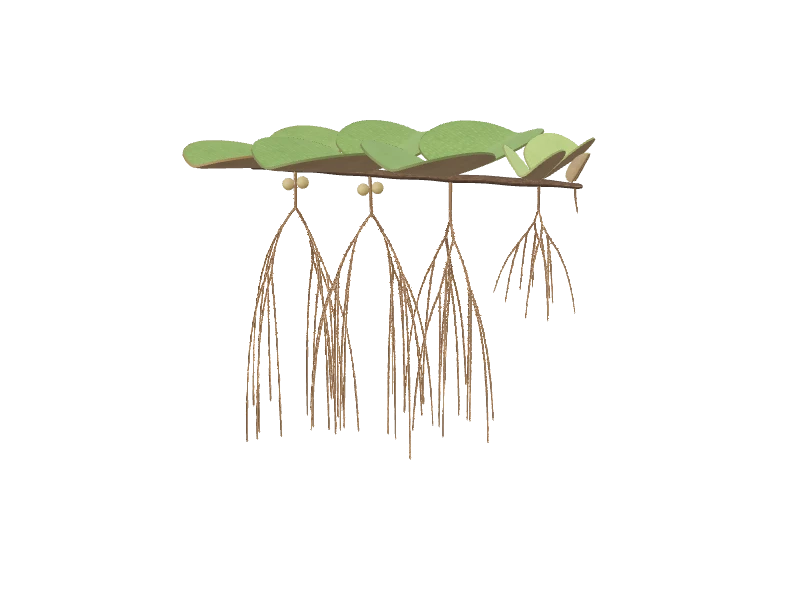 View in 3D: Salvinia preauriculata
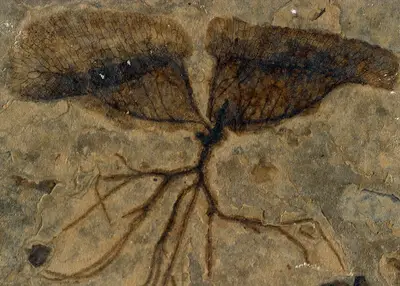
A fossil floating fern from Fossil Lake 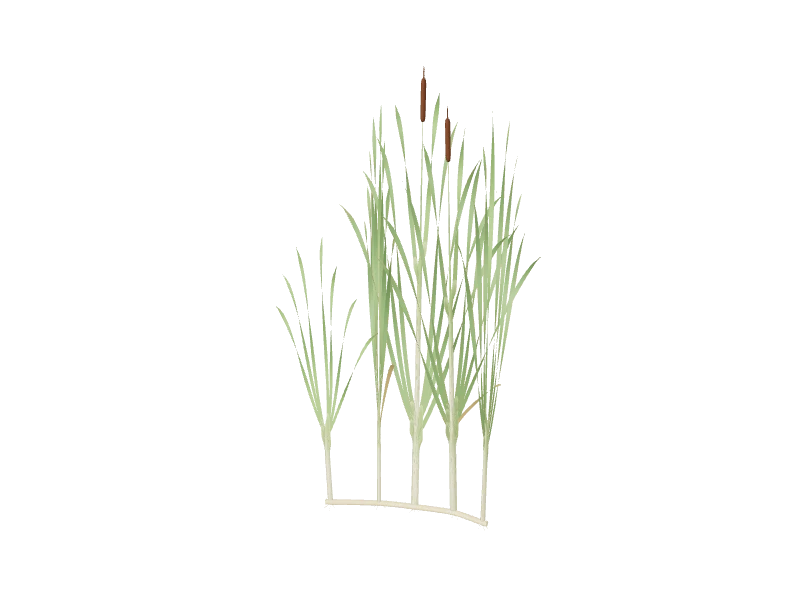 View in 3D: Typha sp.
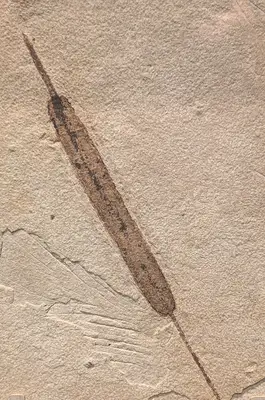
The fossil cattail head from Fossil Lake, 18 cm long
How the models are made
Each model starts from a dossier of the published fossil evidence in which every detail is marked as documented from fossils, measured from a photograph, inferred from a living relative, or speculative. Two AI modelers, Anthropic's Claude and OpenAI's Codex, build competing versions from the same brief. Reviewers from both score them blind against the dossier, and the winner is corrected until a verifier from the other AI family finds no remaining scientific problems.
Each model's caption separates what the fossils show from what is inferred, and every model can be downloaded and reused under the license given with it. The plain-language cards draw their facts from the same dossiers.
Fossil photo credits
- Amia pattersoni: Amia pattersoni - FOBU7218.tiff · NPS photo · Public domain · Source
- Atractosteus atrox: Atractosteus atrox 200.4 cm/78.9 in long University of Wyoming specimen · NPS photo · Public domain (NPS) · Source
- Cockerellites liops: Cockerellites liops (formerly Priscacara liops) FOBU.jpg · NPS Photo · Public domain · Source
- Crossopholis magnicaudatus: Crossopholis magnicaudatus FOBU.tiff · NPS Photo · Public domain · Source
- Diplomystus dentatus: Diplomystus dentatus with Knightia eocaena in its Mouth (f17b1d0b-155d-451f-672e-860c7556be55).tif · NPS photo · Public domain · Source
- Heliobatis radians: Heliobatis radians with two Knightia eocaena (3bce1f6e-f693-43d1-aa0f-67ba7fc50895).tif · NPS photo · Public domain · Source
- Knightia eocaena: Knightia eocaena is perhaps the most common complete vetebrate fossil in the world. It is Wyoming's state fossil. The fossil is (f17c775b-155d-451f-67e7-4db202d79cd2).tif · NPS Photo · Public domain · Source
- Mioplosus labracoides: Mioplosus labracoides eating a Diplomystus dentatus (f1a40309-155d-451f-6743-18a061242c6e).tif · NPS Photo · Public domain · Source
- Notogoneus osculus: The Notogoneus osculus is a bottom-feeding fish, which is peculiar as the bottom of Fossil Lake was too salty for the fish to (a013ae10-27ec-4e57-a296-93eabbd28fd6).tif · NPS photo · Public domain · Source
- Phareodus encaustus: Large teeth and rear-placed fins make Phareodus encaustus well suited for catching and eating other fish. The specimen is (f17ecf1b-155d-451f-6731-ab33f11c8d70).tif · NPS Photo · Public domain · Source
- Priscacara serrata: Tynsky, Jim- Priscacara serrata Fossil (8e3b95ea-1005-4c34-b4f0-05086409dbd4).JPG · NPS photo · Public domain · Source
- Cedrelospermum nervosum: Cedrelospermum nervosum as Myrica minuta USNM P36574 img1.jpg · Cynthia Walden · CC0 · Source
- Equisetum sp.: Equisetum wyomingense Lesquereux USNM P7045 img1.jpg · Curt Breckenridge · CC0 · Source
- Nelumbo sp.: Fossilised Nelumbo sp. fruit.jpg · NPS Photo · Public domain · Source
- Pinus sp.: Pine winged seed FMNH PP 33655 (Grande 1984, fig. V.10) · Lance Grande (Geological Survey of Wyoming Bulletin 63) · CC BY 4.0 · Source
- Populus wilmattae: Populus wilmattae Cockerell holotype USNM 36852 img1.jpg · Cynthia Walden · CC0 · Source
- Sabalites sp.: Palmites sp FOBU446 fossil.tiff · National Park Service · Public domain · Source
- Salvinia preauriculata: Salvinia preauriculata, catalog number FOBU11895 · NPS Photo · Public domain (NPS) · Source
- Typha sp.: Fossil cattail head FMNH PP 33654 · Janine and Jim Eden · CC BY 4.0 · Source
A long-jawed bowfin, one of the lake's biggest hunters
- How big
- About 75 cm (30 in) long, almost a skateboard; up to 1.25 m (4 ft)
- What it ate
- Other fish; small ones turn up in fossil bowfins' mouths and stomachs
- Where it lived
- Both near the shore and out in the open lake
- Fossils found
- Very rare: none among 4,687 finds at the park's research quarry
This bowfin had a long body, a long head and long jaws lined with sharp, pointed teeth. Like living bowfins, it probably cruised slowly by rippling the long fin along its back, then burst forward to grab a fish. It probably also rose to the surface now and then to gulp air.
Fun fact Living bowfins can swim backward by reversing the ripples in their long back fin, and this one probably could too.
A giant armoured gar, the biggest known Fossil Lake fish
- How big
- About 1.7 m (5.5 ft) long, as long as a grown-up is tall; up to 2 m
- What it ate
- Mostly fish, probably snatched with a quick sideways snap
- Where it lived
- Probably shallow, weedy water near the shore
- Fossils found
- Very rare: just 2 gars in one count of 5,232 fossil fish
This giant gar wore a suit of thick, diamond-shaped scales that locked together edge to edge. Its long snout bristled with small teeth and a row of bigger fangs, and scientists think only crocodiles could have hunted a full-grown one. Like gars today, it probably floated almost still in shallow water, rising now and then to gulp air.
Fun fact A fossil poop 13.5 cm (5 in) long was found next to one skeleton, and the scientist who studied it thought only a fish this big could have made it.
A small, spiny fish that spent its life in schools
- How big
- About 12 cm (5 in), like a soda can standing up; up to 15 cm (6 in)
- What it ate
- Probably plankton (tiny drifting life), insects, maybe plants
- Where it lived
- In schools out in the open middle of the lake
- Fossils found
- Very common mid-lake, often in layers of fish that died together
Cockerellites was a small, tall-bodied fish with stiff back spines, probably silvery with a darker top like its living relatives. It swam in schools its whole life, and scientists think it picked tiny food out of the water. It was an important meal for a big hunting fish of the lake, and some have been found inside that hunter's stomach.
Fun fact Cockerellites is the fish shown on the entrance sign at Fossil Butte National Monument.
A paddlefish with a sensing snout and a big tail
- How big
- About 80 cm (31 in) long, like a skateboard; up to about 1.2 m (4 ft)
- What it ate
- Other fish; some fossils still have fish in their stomachs
- Where it lived
- Shallow water near shore; the young probably grew up in rivers
- Fossils found
- Rare; quarry workers long mistook them for poorly preserved gars
Crossopholis swam through shallow water near the shore, a flat, narrow paddle sticking straight out above its big mouth. Fossils show the paddle held tiny sense organs, and living paddlefish use theirs to find prey even in dark or cloudy water. Its name means "fringed scale, large-tailed", after the tiny comb-like scales on its skin and its big tail fin.
Fun fact Scientists once thought it strained tiny floating animals from the water, like its living cousin the American paddlefish, but fish bones in its stomach show it hunted fish instead.
A herring cousin that swallowed other fish whole
- How big
- Adults often about 30 cm (12 in), a ruler long; up to 65 cm (26 in)
- What it ate
- Young ones probably ate plankton (tiny drifting life); adults ate fish
- Where it lived
- Open lake, probably near the surface; big ones mostly mid-lake
- Fossils found
- Second most common fossil fish here; most are 8–15 cm (3–6 in)
Diplomystus had a tall, flat body and a lower jaw that stuck out and up like a scoop. Young ones probably ate plankton, but adults hunted smaller fish, likely sucking them in head-first from below. No fossil shows its colours, but like most open-water fish it was probably dark on top and silvery underneath.
Fun fact Many Diplomystus fossils have another fish stuck in their mouth, and sometimes that fish is another Diplomystus.
A round stingray that lived in a lake, not the sea
- How big
- About 35 cm (14 in) long with its tail, a bit longer than a ruler
- What it ate
- Probably snails, crayfish, shrimp and small fish
- Where it lived
- On the lake bottom, mostly in shallower water near shore
- Fossils found
- Hundreds known, many showing a sunburst of fin rays in the disc
Heliobatis was flat and nearly round, with a long, thin, whip-like tail. Like stingrays today, it probably glided over the muddy lake bottom by rippling the edges of its body, and sometimes hid under a thin layer of mud. Halfway down its tail sat one to three barbed stings, which living stingrays swing at anything that threatens them.
Fun fact So far, Fossil Lake is the only place in the world where whole, joined-together skeletons of freshwater stingrays have been found.
A little herring that swam in schools
- How big
- Most fossils are about 8 cm (3 in), finger-length; up to 25 cm (10 in)
- What it ate
- Probably algae, tiny shelled animals and insects; rarely small fish
- Where it lived
- In schools all over the open lake, thickest near the shore
- Fossils found
- The most common fossil fish here; 2,319 at the park's research quarry
Knightia was a slim little herring, probably silvery like the herrings alive today. It swam in schools all its life, and it probably strained small bits of food from the water with its gills. Many bigger fish hunted it, and their fossils are often found with a Knightia in their mouth.
Fun fact Knightia is Wyoming's state fossil, and it may be the most common complete fossil of a backboned animal anywhere in the world.
A perch-like hunter that swallowed other fish
- How big
- About 25 cm (10 in), almost a ruler long; up to 51 cm (20 in)
- What it ate
- Other fish, mostly small herrings, some half its own length
- Where it lived
- From near the shore out to the open middle of the lake
- Fossils found
- Uncommon, about 2 to 4 of every 100 fossil fish found
Mioplosus had a strong, perch-shaped body, two fins on its back and a broad, fan-shaped tail. Young ones swam in schools, but grown-ups probably hunted alone, grabbing other fish with a big mouth lined with small, sharp teeth. The teeth pointed slightly inward, so a fish that was too big could not be spat back out.
Fun fact No other Fossil Lake fish is found so often with a fish it was eating still in its mouth or stomach.
A pointy-nosed bottom feeder that left a fossil trail
- How big
- About 46 cm (18 in) long, the length of a cat; up to 91 cm (3 ft)
- What it ate
- Probably algae, rotting scraps or tiny animals, sucked off the mud
- Where it lived
- The deep middle of the lake, feeding along the bottom
- Fossils found
- About 1 in 100 fossil fish from the deep lake beds; most are adults
Notogoneus was a long, slim fish with a pointed, scaly snout and a small, toothless mouth tucked underneath. Scientists think it cruised along the deep lake floor, tipping its nose down to suck food off the mud. The bottom water there was probably unlivable most of the time, so it may have come to feed only at certain times of year.
Fun fact Scientists think one of these fish left a fossil trail in the lake mud: grooves from its tail and belly fins, and little oval marks where its mouth touched the bottom.
A sharp-toothed hunter built for bursts of speed
- How big
- About 40–50 cm (16–20 in), the length of a cat; up to 76 cm (30 in)
- What it ate
- Other fish, including spiny ones found in its stomach
- Where it lived
- Open water, both near shore and out in the middle of the lake
- Fossils found
- 8 of 4,687 fossils logged at the park's research quarry, 1998–2020
Phareodus had a tall, oval body covered in big scales, long front fins, and long jaws lined with sharp, pointed teeth. The fins on its back and underside sat far back near the tail, which scientists think helped it put on sudden bursts of speed. Grown-ups probably hunted alone, while young ones swam together in schools.
Fun fact The species was first named from just a few scales, and its namer guessed the fish was 3 or 4 feet (about 1 m) long; whole fossils later showed that was too big.
A tall, spiny fish with a saw-edged cheek
- How big
- About 19 cm (7.5 in), as long as a pencil; up to 41 cm (16 in)
- What it ate
- Probably snails, insects and small shelled creatures; sometimes fish
- Where it lived
- Mostly mid-lake, sometimes near shore; it did not swim in schools
- Fossils found
- Common mid-lake, but a smaller look-alike outnumbers it over 3 to 1
Priscacara serrata had a tall, oval body, thick sharp spines and a cheek edged like a saw. Unlike its smaller look-alike, it did not travel in schools. Its spines may have kept bigger fish from swallowing it tail-first, though some Priscacara spines have turned up inside large hunting fish.
Fun fact Its jaw teeth were tiny, but deep in its throat it had heavy plates of flat, molar-like teeth, probably for crushing snail shells.
A feathery-leaved tree known from just three fossils
- How big
- Probably about 12 m (40 ft) tall, as tall as a school bus is long
- Where it grew
- Probably the drier forest a little way back from the shore
- Relatives today
- Pea family; its only living cousin grows on Hispaniola (Caribbean)
- Fossils found
- Only three: one nearly whole leaf and two loose pieces of leaves
Like its living cousin, this tree probably had pale grey bark and held its leaves in tufts on short, knobby side shoots. Its leaves could grow as wide as a dinner plate, each split into 17 slim branches lined with dozens of pairs of tiny leaflets. Sunlight would have shone through all those little gaps like lace.
Fun fact Most feathery leaves in the pea family end in a pair of branches, but this one ends in three that grow from a single point, the clue that linked it to its living cousin.
A vanished elm cousin with tiny winged fruits
- How big
- Probably about 12 m (40 ft) tall, like a telephone pole
- Where it grew
- Open, freshly cleared ground on lake and stream banks
- Relatives today
- Elm family; cousins include zelkova trees of Japan, Korea and China
- Fossils found
- Leaves, a leafy twig and one tiny winged fruit, 9 mm long
Scientists think this tree was a pioneer, one of the first to grow on bare ground left by floods or covered by volcanic ash. Its narrow leaves, no longer than your finger, grew in two neat rows along thin twigs, so each twig made a flat spray. Tiny winged fruits grew in clusters on short, leafy shoots.
Fun fact Scientists once gave its leaves and fruits several different names, even calling some of the leaves a willow, until twigs with leaves and fruits still attached showed they all came from one tree.
A horsetail with jointed stems and leaves like tiny teeth
- How big
- Stems about as thick as a pencil (6 mm, 1/4 in); maybe 1 m (3 ft) tall
- Where it grew
- In very shallow water at the lake's edge
- Relatives today
- Living horsetails, such as North America's scouring rush of wet shores
- Fossils found
- Only stem pieces; just 2 of 3,471 finds at the park's research dig
Picture a clump of straight stems standing in very shallow water at the lake's edge, probably stiff and dull green like living horsetails. Each stem was jointed about every 5 cm (2 in), and every joint wore a tight collar edged with tiny pointed teeth. Fossils of young fish turn up in the same shoreline rocks, so fish probably swam among the stems.
Fun fact In another Green River lake, a fossil reef holds stem-shaped holes left by horsetails that were still standing upright right where they grew.
A lotus with round leaves up to half a metre wide
- How big
- Leaves 10–51 cm (4–20 in); the biggest nearly two dinner plates wide
- Where it grew
- Probably rooted in mud under calm, shallow water near the shore
- Relatives today
- The two living lotuses, from eastern North America and from Asia
- Fossils found
- Lily pads, seed pods and root tufts, maybe from more than one kind
This lotus probably grew the way the American lotus does today, from a stem creeping through the mud under calm, shallow water. Its round leaves, each joined to its stalk right in the middle, likely floated flat on the water or stood above it like shallow bowls. A flat-topped seed pod dotted with dozens of seed pockets has been found too, but no flower, so nobody knows what colour its blooms were.
Fun fact People often call its leaves lily pads, but a lotus is not a water lily. A water lily leaf has a slit running from the edge to the middle, while a lotus leaf is a full circle.
A slender-needled pine from the hills around the lake
- How big
- Probably about 25 m (80 ft) tall, like an 8-storey building
- Where it grew
- Cool, damp hills around the lake, not down by the shore
- Relatives today
- Most like white pines, such as the eastern white pine of the US
- Fossils found
- Loose needles, one winged seed and lots of pollen, but no cones
On the cool hills around the lake, this pine probably stood tall among spruce and fir, its long branches spreading in layers. Its slender needles likely grew in soft bunches of five near the branch tips. Wind and streams carried its pollen, a fine dust made by its cones, down into the lake along with needles and winged seeds.
Fun fact The pine that grows at Fossil Butte today, the limber pine, has almost wingless seeds, so it is a different kind from the ancient pine, whose seed had a long wing.
A cottonwood cousin from the forests by the lake
- How big
- Probably about 18 m (60 ft) tall, like a 6-storey building
- Where it grew
- Damp forests along the lake shore and nearby streams
- Relatives today
- Poplars; its closest living cousin is a riverside cottonwood in Mexico
- Fossils found
- Only leaves so far, and nobody knows how common it was
On damp ground near the shore, this poplar probably spread a broad, leafy crown like a cottonwood. Its leaves hung on long, thin stalks, with small rounded teeth along the edges, and many ended in a long, narrow point. Scientists think the leaves quivered in the wind, as living cottonwood leaves do.
Fun fact Living poplars flower on bare twigs before their leaves open, but a fossil twig from Utah shows that this poplar grew its fruits while it was already in leaf.
Palms once grew beside this lake in Wyoming
- How big
- Leaves about 2 m (6.5 ft) long, as long as a door is tall
- Where it grew
- Probably on sandy ground close to the lake's edge
- Relatives today
- Probably fan palms, like the cabbage palm of riverbanks and dunes
- Fossils found
- Many big, complete leaves, but no trunk has been found with them
Its leaves were giant pleated fans, wider than they were long, each made of about 55 folded strips on a smooth stalk with no spines. They probably grew in a round green crown, like those of living fan palms. No trunk has been found, so the model's height of 8 m (26 ft), as tall as a two-storey house, is a careful guess, and the real palm may have been shorter.
Fun fact Palms are clues to old weather. Finding them here tells scientists that the coldest month at Fossil Lake probably averaged above about 5 °C (41 °F).
A tiny fern that floated free on calm, fresh water
- How big
- Each leaf about 2 cm (3/4 in) long, a bit smaller than a coin
- Where it grew
- Floating on calm, fresh water, probably in mats in quiet bays
- Relatives today
- Salvinia water ferns, which today grow only in fresh water
- Fossils found
- Small pieces, leaves and 'roots' still joined; how common is unknown
Like its living cousins, this little fern probably floated in short chains, never touching the bottom. Along its thin stem sat pairs of oval leaves about 2 cm long, cupped upward and covered in rows of tiny bumps, with a bunch of what looks like roots dangling below each pair. Some fossils still carry tiny round spore cases, the pods a fern uses instead of flowers to make new plants.
Fun fact Those dangling "roots" are not roots at all. Each bunch is a third leaf, split into a dozen or more thin threads that hang down in the water.
A cattail with a long, slim seed head
- How big
- Seed head 18 cm (7 in); plant probably door-high, about 2 m (6.5 ft)
- Where it grew
- Standing in shallow water right along the lake's edge
- Relatives today
- Living cattails of shallow water, like the broad-leaved cattail
- Fossils found
- One complete seed head and stems from shore rocks; no leaf described
Like living cattails, it probably formed a thick fringe of tall, flat, ribbon-like leaves in the shallow water at the lake's edge. Its slim seed heads stood on straight stalks, each topped by a thin, bare spike where the pollen-making flowers had already fallen off.
Fun fact Fossil Lake's best-known cattail head was found in rock that formed in the deep, quiet middle of the lake, so it must have drifted out from the shore before it sank.