Salvinia preauriculata
floating fern
This entry was compiled from research notes and has not yet been reviewed by a person. Its facts come from the sources listed below, which are the authority if anything here disagrees with them.
A tiny fern that floated free on calm, fresh water
- How big
- Each leaf about 2 cm (3/4 in) long, a bit smaller than a coin
- Where it grew
- Floating on calm, fresh water, probably in mats in quiet bays
- Relatives today
- Salvinia water ferns, which today grow only in fresh water
- Fossils found
- Small pieces, leaves and 'roots' still joined; how common is unknown
Like its living cousins, this little fern probably floated in short chains, never touching the bottom. Along its thin stem sat pairs of oval leaves about 2 cm long, cupped upward and covered in rows of tiny bumps, with a bunch of what looks like roots dangling below each pair. Some fossils still carry tiny round spore cases, the pods a fern uses instead of flowers to make new plants.
Fun fact Those dangling "roots" are not roots at all. Each bunch is a third leaf, split into a dozen or more thin threads that hang down in the water.
The science
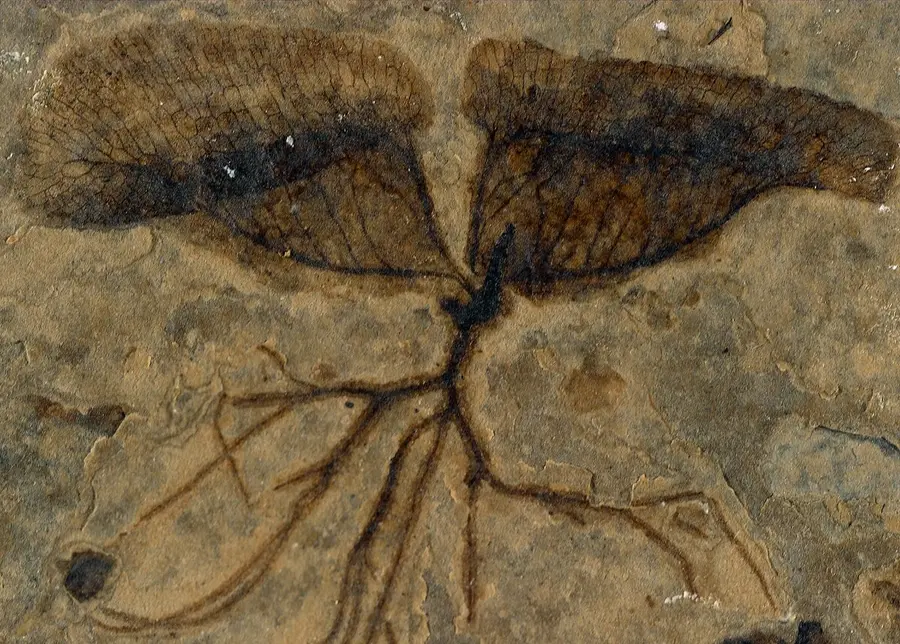
FOBU11895; alt text: fossil of 2 cup like leaves with skinny roots hanging below
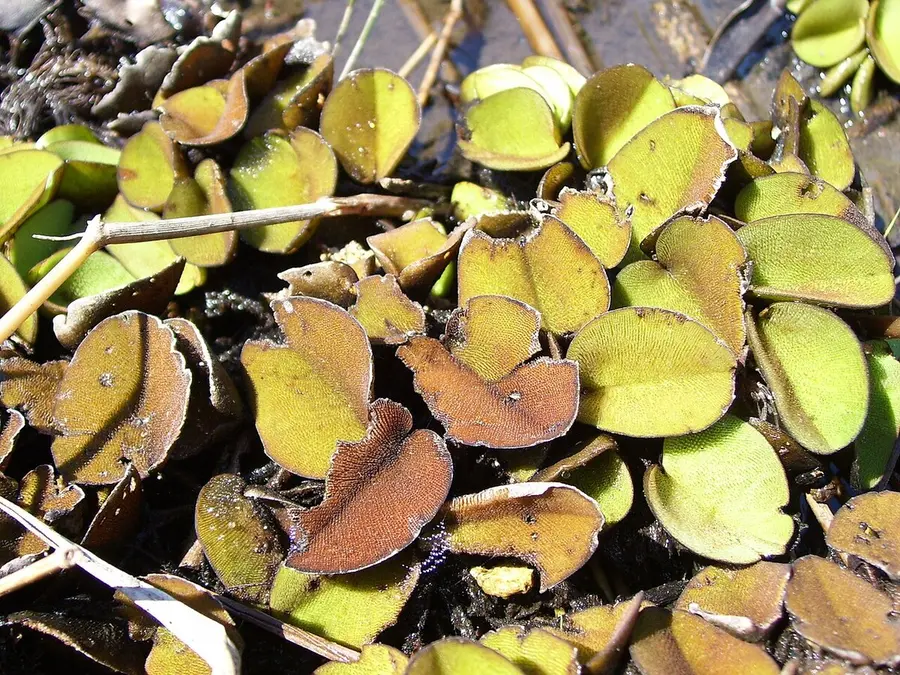
modern analog: Salvinia auriculata; catalog modern_analog: "Salvinia auriculata / Salvinia molesta (floating watermoss)"
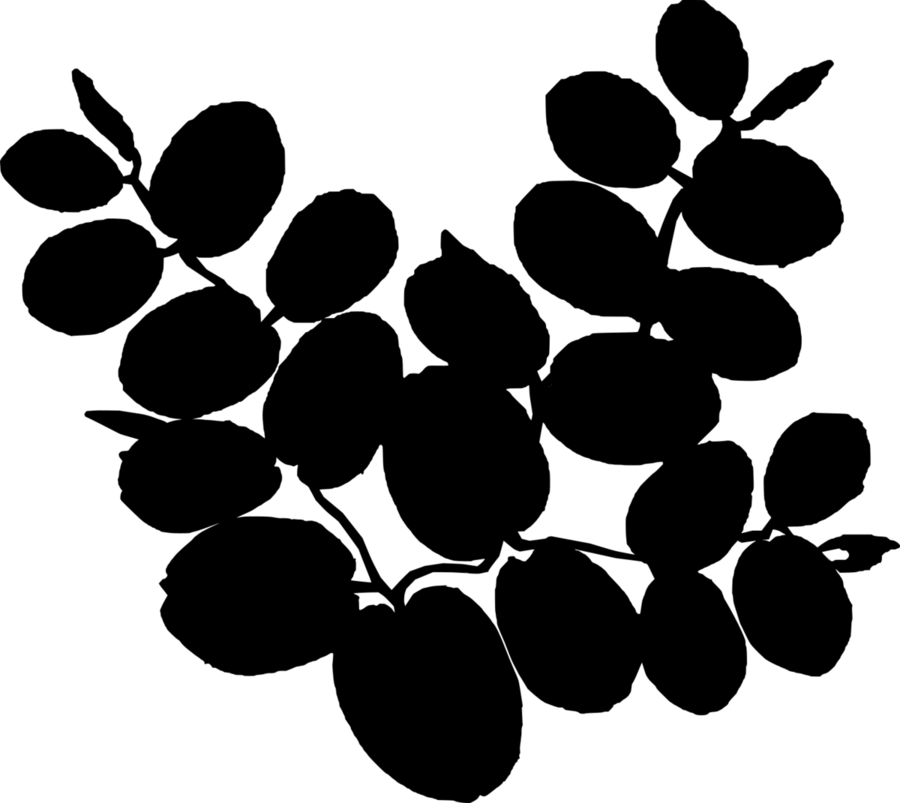
PhyloPic silhouette; depicts Salvinia minima (stand-in for Salvinia preauriculata)
3D models
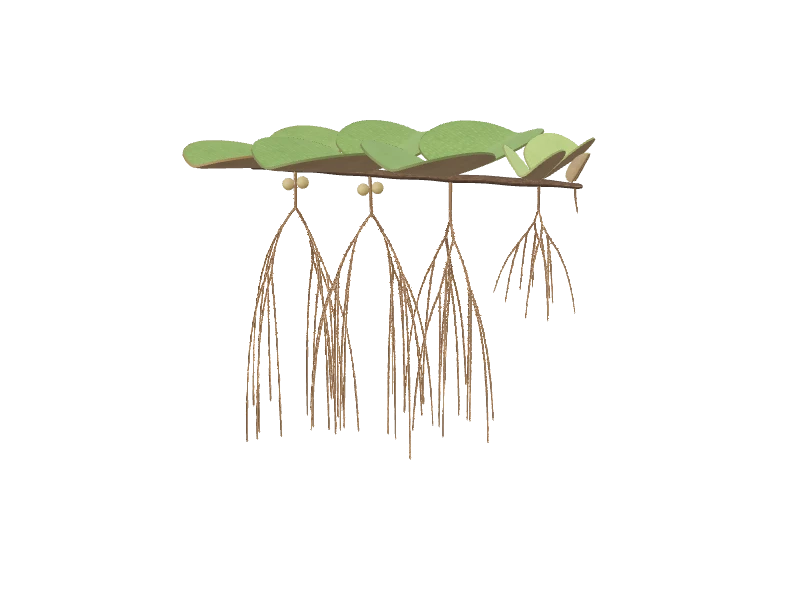
Built from a cited dossier (Fossil Lake fossils including FOBU 11895 and fertile Field Museum specimens, Berry's 1925 description of the species, and the living water fern Salvinia auriculata) and chosen by blind review over a competing model by the narrowest margin of the plant set (96.2 vs 95.8). Shown as a floating fragment 4 cm long, true size. Fossils document each node's two floating leaves, elliptic and about 19 mm long with rows of small bumps, and its finely divided submerged leaf of a dozen or more threads; Field Museum specimens also show the small spore cases at the base of the submerged leaves. Fossil Lake leaves are a little larger than Berry's type specimens, and two Field Museum fossils are identified only as "cf." this species. The upward fold of the floating leaves, the length of the chain and all colours are inferred from living Salvinia.
- Group
- Ferns & allies
- Form
- floating aquatic fern
- Known from
- leaf (two floating leaves + one submerged root-like leaf per node)
- Habitat
- open water: calm shallow bays, floating mats
- Abundance
- on exhibit; abundance unknown
- Modern relative
- Salvinia auriculata / Salvinia molesta (floating watermoss)
- Occurrence
- Fossil Lake (FOBU11895); Salvinia (genus) at Wasatch Fm floodplain localities (Latham, Sourdough, Niland Tongue) of the Greater Green River Basin
- Notes
- Authority from a search-result summary, not a primary source (unverified). NPS: living Salvinia occur only in fresh water and spread rapidly in warm water.
Sources
- National Park Service, Fossil Butte National Monument 2025. Fossil Plant Species. nps.gov/fobu, last updated September 26, 2025; accessed 2026-10-05. ↗
- Pigg, K.B. & DeVore, M.L. 2010. Floristic composition and variation in late Paleocene to early Eocene floras in North America. Bulletin of Geosciences 85(1):135–154., Table 4 ↗