Cockerellites liops
small perch
Also published as: Priscacara liops
This entry was compiled from research notes and has not yet been reviewed by a person. Its facts come from the sources listed below, which are the authority if anything here disagrees with them.
A small, spiny fish that spent its life in schools
- How big
- About 12 cm (5 in), like a soda can standing up; up to 15 cm (6 in)
- What it ate
- Probably plankton (tiny drifting life), insects, maybe plants
- Where it lived
- In schools out in the open middle of the lake
- Fossils found
- Very common mid-lake, often in layers of fish that died together
Cockerellites was a small, tall-bodied fish with stiff back spines, probably silvery with a darker top like its living relatives. It swam in schools its whole life, and scientists think it picked tiny food out of the water. It was an important meal for a big hunting fish of the lake, and some have been found inside that hunter's stomach.
Fun fact Cockerellites is the fish shown on the entrance sign at Fossil Butte National Monument.
The science
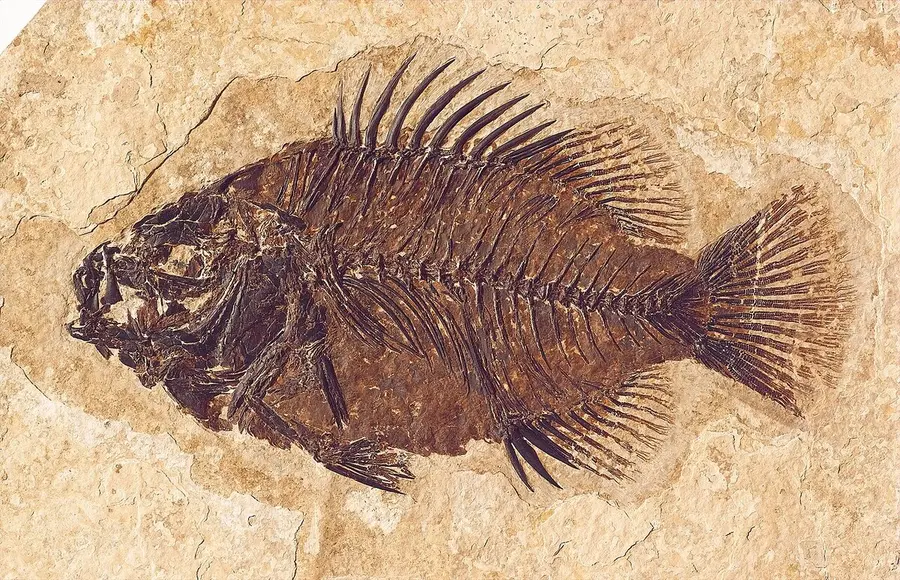
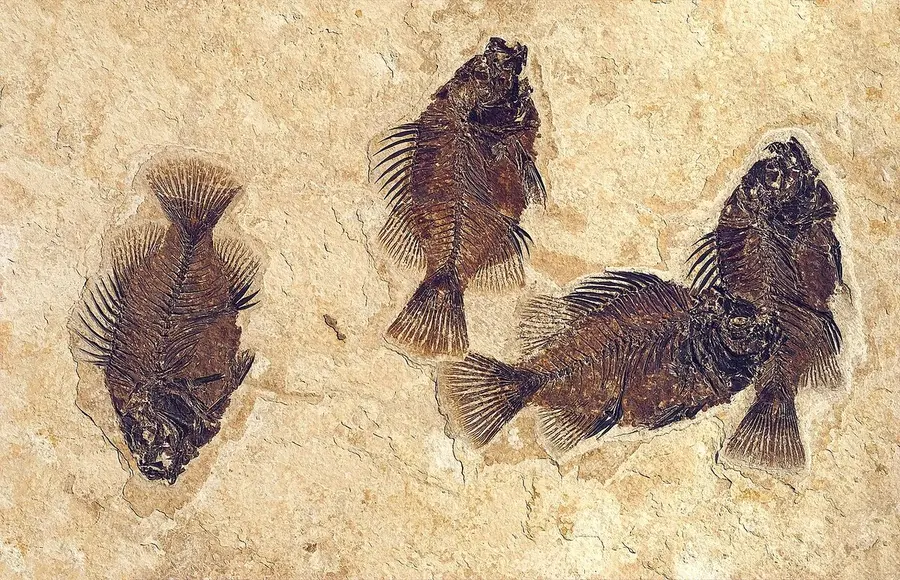
mass mortality
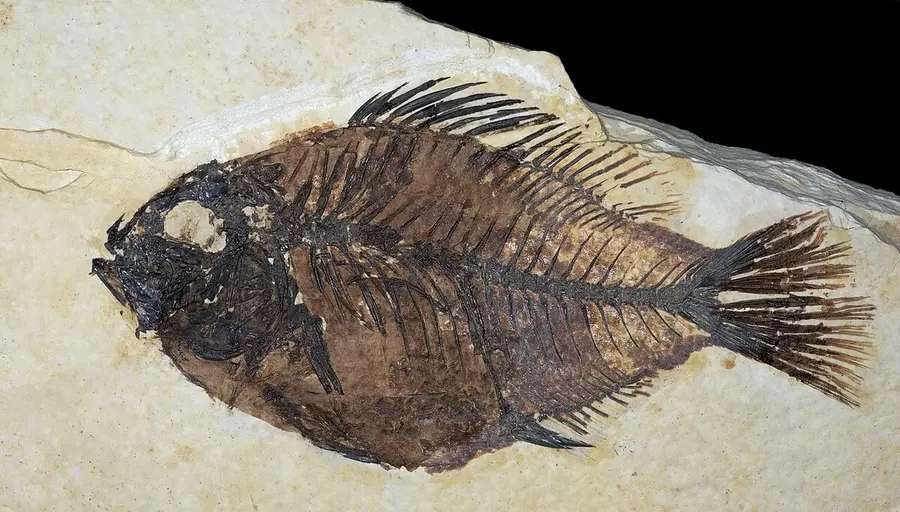
Fossil Lake per description
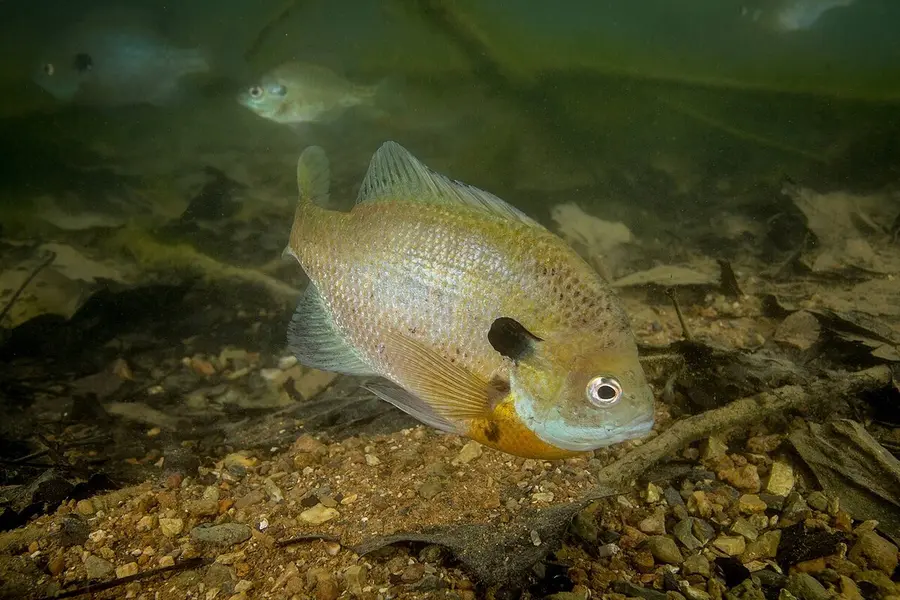
modern analog: Lepomis macrochirus (Bluegill); catalog modern_analog: "Lepomis macrochirus (bluegill)"
PhyloPic silhouette; depicts Lepomis gibbosus (stand-in for Cockerellites liops)
3D models
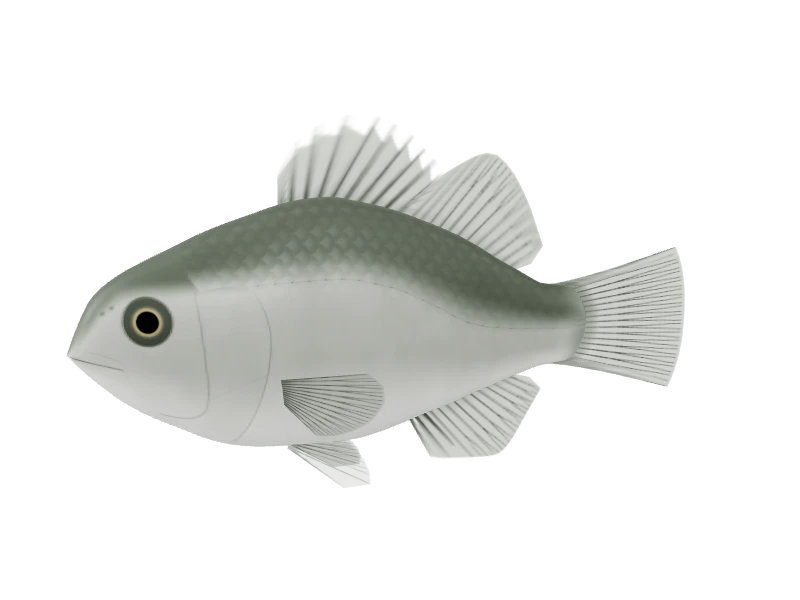
Built from a cited anatomical dossier (Grande 1984, published descriptions and photographed fossils) and chosen by blind review over a competing model (94.0 vs 92.1). Shown at 9 cm standard length. The deep oval body (about half as deep as long), the snout set below mid-depth, the long soft dorsal and anal fins (X,12 and III,11, the counts that separate it from Priscacara serrata), the smooth gill-cover margin, the slender pelvic spine and the fan-shaped tail are documented from fossils. No colour pattern is known from fossils, so the countershaded olive-grey back, silver flanks and pale belly are inferred from the living white perch. Some authors keep this species in the genus Priscacara.
- Description
- Small deep-bodied schooling 'sunfish' (temperate bass); the fish on the Fossil Butte entrance sign
- Group
- Fish
- Size
- max ~15 cm TL
- Habitat
- schools throughout life; mass-mortality layer in the middle of the 18-inch layer
- Diet
- plankton, small invertebrates, insects
- Abundance
- extremely common at F-1 (outnumbers P. serrata >3:1)
- Modern relative
- Lepomis macrochirus (bluegill)
- Notes
- Cockerellites erected by Jordan 1923; some authors (e.g. Whitlock 2010, unverified) keep the species in Priscacara. An important food fish for Phareodus (G84).
Sources
- Grande, L. 1984. Paleontology of the Green River Formation, with a review of the fish fauna (2nd ed.). Geological Survey of Wyoming Bulletin 63, 333 p., pp.150-151 ↗
- National Park Service, Fossil Butte National Monument 2025. Fossil Fish Species. nps.gov/fobu, last updated November 18, 2025; accessed 2026-10-05. ↗
- Sullivan, S.P., Grande, L., Gau, A. & McAllister, C.S. 2012. Taphonomy in North America's most productive freshwater fossil locality: Fossil Basin, Wyoming. Fieldiana Life and Earth Sciences 5: 1–4. ↗