Arcoa lindgreni
pea-family tree
This entry was compiled from research notes and has not yet been reviewed by a person. Its facts come from the sources listed below, which are the authority if anything here disagrees with them.
A feathery-leaved tree known from just three fossils
- How big
- Probably about 12 m (40 ft) tall, as tall as a school bus is long
- Where it grew
- Probably the drier forest a little way back from the shore
- Relatives today
- Pea family; its only living cousin grows on Hispaniola (Caribbean)
- Fossils found
- Only three: one nearly whole leaf and two loose pieces of leaves
Like its living cousin, this tree probably had pale grey bark and held its leaves in tufts on short, knobby side shoots. Its leaves could grow as wide as a dinner plate, each split into 17 slim branches lined with dozens of pairs of tiny leaflets. Sunlight would have shone through all those little gaps like lace.
Fun fact Most feathery leaves in the pea family end in a pair of branches, but this one ends in three that grow from a single point, the clue that linked it to its living cousin.
The science
3D models
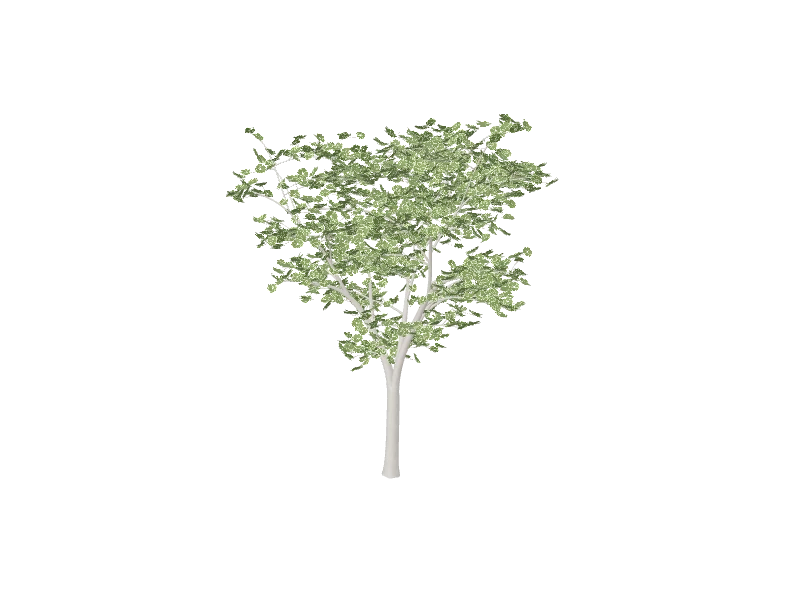
Built from a cited dossier (the holotype leaf FMNH PP 55447 from Fossil Lake and two detached pinnae, described by Herendeen & Herrera 2019, and the one living species, Arcoa gonavensis of Hispaniola, with honey locust for proportions) and chosen unanimously by blind review over a competing model (94.5 vs 90.0). Shown as one tree 12 m tall in full leaf. The leaf is documented from the fossils: bipinnate, with 8 pairs of pinnae carrying many pairs of tiny linear leaflets, and ending in three pinnae from one point, the feature that identifies the genus. Only three leaf specimens are known, with no wood, flowers or fruit, so the tree's height, trunk, layered crown, the tufts of leaves on short shoots, the pale grey bark and all colours are reconstructed from A. gonavensis and its relatives. Published sources call Arcoa a shrub or small tree; specimen labels of the living species give 12–15 m.
- Group
- Eudicots
- Form
- caesalpinioid legume tree (bipinnate leaves)
- Known from
- leaf (bipinnate, 8 pairs of pinnae ending in a triad; pinnae with ca. 35-75 pairs of tiny linear leaflets)
- Habitat
- forest (the living Arcoa grows in seasonally dry forest on Hispaniola)
- Abundance
- 3 specimens
- Modern relative
- Arcoa gonavensis; generic bipinnate legume tree
- Occurrence
- Fossil Lake: FBM Localities A and D (Lewis Ranch sites 1 and 4) near Fossil Ridge; holotype FMNH PP55447
- Notes
- Specimen count per Wikipedia list. Authors: leaf twice the size of the late Eocene Florissant species, consistent with the more tropical Fossil Lake climate.