Saniwa ensidens
This entry was compiled from research notes and has not yet been reviewed by a person. Its facts come from the sources listed below, which are the authority if anything here disagrees with them.
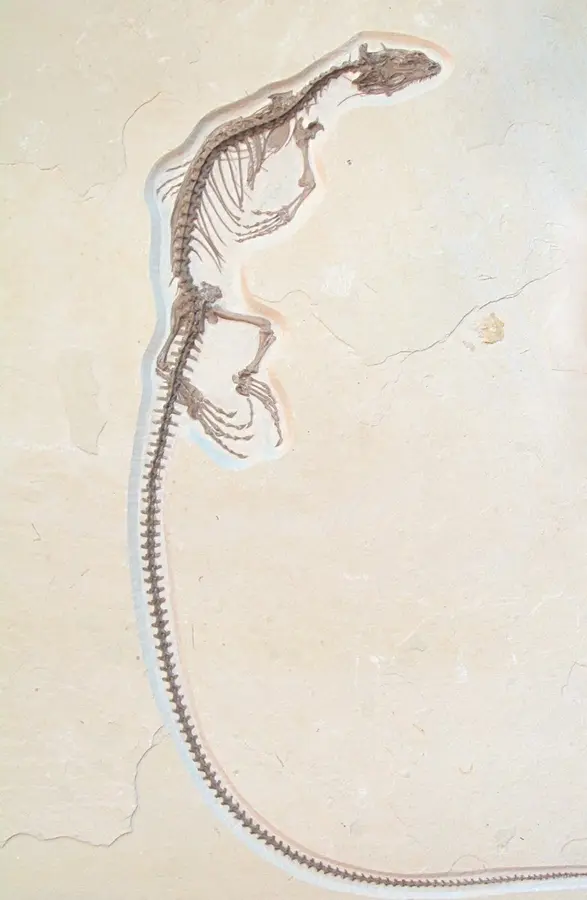
cast of FMNH PR 2378; alt text: Saniwa ensidens lizard fossil with a tail twice as long as its body. From Green River Formation.
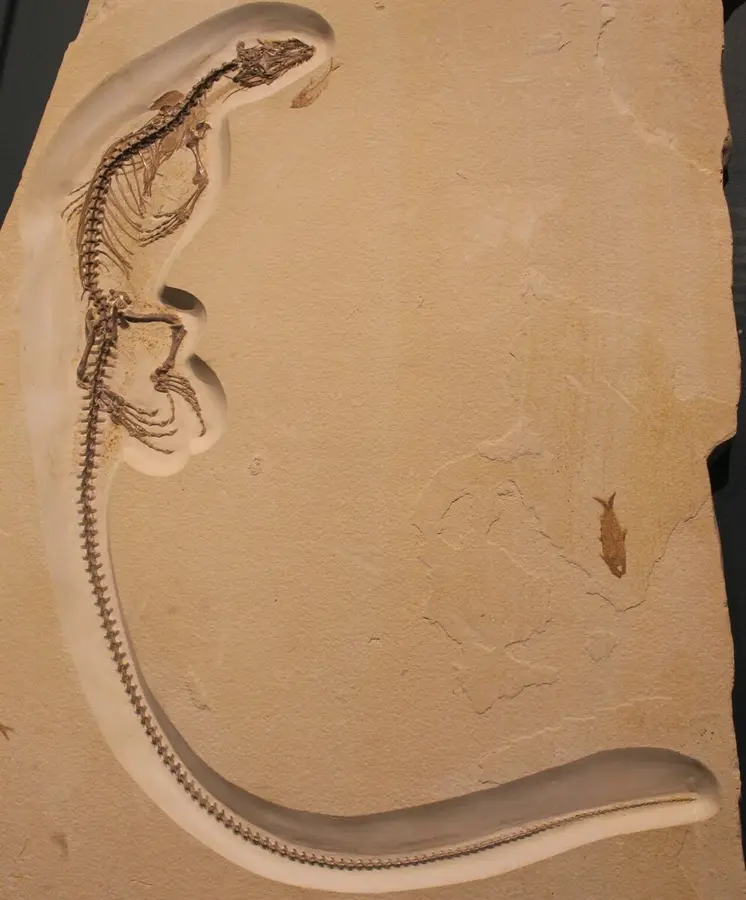
FMNH PR 2378
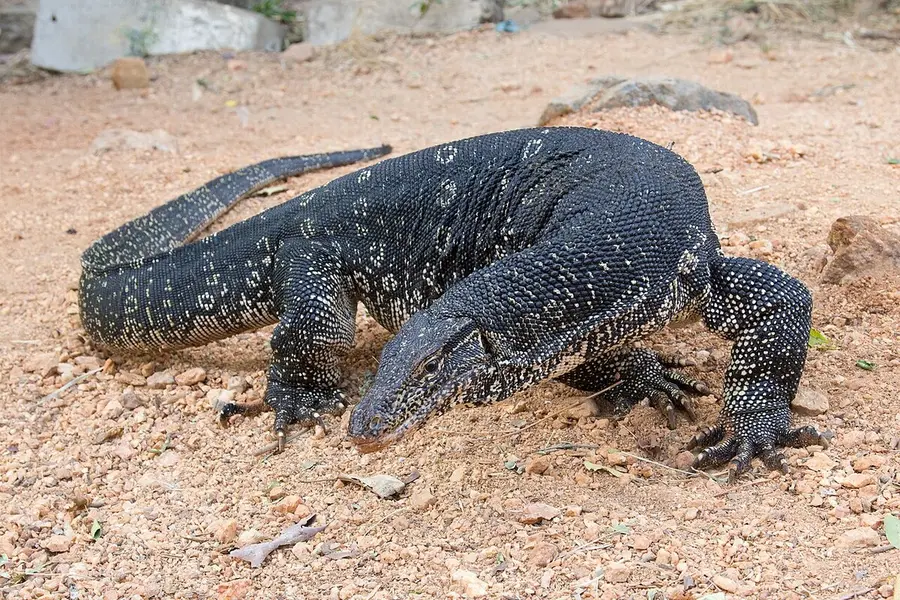
modern analog: Varanus salvator (Asian water monitor); catalog modern_analog: "Varanus salvator (water monitor)"

PhyloPic silhouette; depicts Varanus caerulivirens (stand-in for Saniwa ensidens)
3D models
same genus-group (Varanus): Komodo dragon
- Description
- Stem monitor lizard (Varanidae); long neck, powerful limbs, long tail
- Group
- Reptile
- Size
- 1.32 m specimen (G84); NPS: one specimen 6 ft
- Habitat
- forested shore; climber
- Diet
- carnivore (inferred)
- Abundance
- very rare (about two skeletons)
- Modern relative
- Varanus salvator (water monitor)
- Notes
- FMNH PR2378 complete skeleton from Locality H (Thompson Ranch) with skin patches, scattered scales and cartilaginous tracheal rings preserved (Rieppel & Grande 2007 abs). Largest lizard of the FBM. Sister to crown Varanus (Conrad et al. 2008). The 1.32 m size is Grande 1984's 'large undescribed lizard, possibly a varanid' (Black Hills Institute specimen, Warfield Springs); PBDB records FMNH PR2380, a cast of a BHI Warfield Springs skeleton, as Saniwa ensidens, so it is treated here as the same taxon (not independently verified).
Sources
- National Park Service, Fossil Butte National Monument 2025. Fossil Reptile Species. nps.gov/fobu, last updated November 20, 2025; accessed 2026-10-05. ↗
- Grande, L. 1984. Paleontology of the Green River Formation, with a review of the fish fauna (2nd ed.). Geological Survey of Wyoming Bulletin 63, 333 p., p.202 ↗
- Conrad, J.L., Rieppel, O. & Grande, L. 2008. Re-assessment of varanid evolution based on new data from Saniwa ensidens Leidy, 1870. American Museum Novitates 3630: 1–15. ↗
- Rieppel, O. & Grande, L. 2007. The anatomy of the fossil varanid lizard Saniwa ensidens Leidy, 1870, based on a newly discovered complete skeleton. J. Paleontology 81(4): 643–665. ↗