Pseudocrypturus cercanaxius
This entry was compiled from research notes and has not yet been reviewed by a person. Its facts come from the sources listed below, which are the authority if anything here disagrees with them.
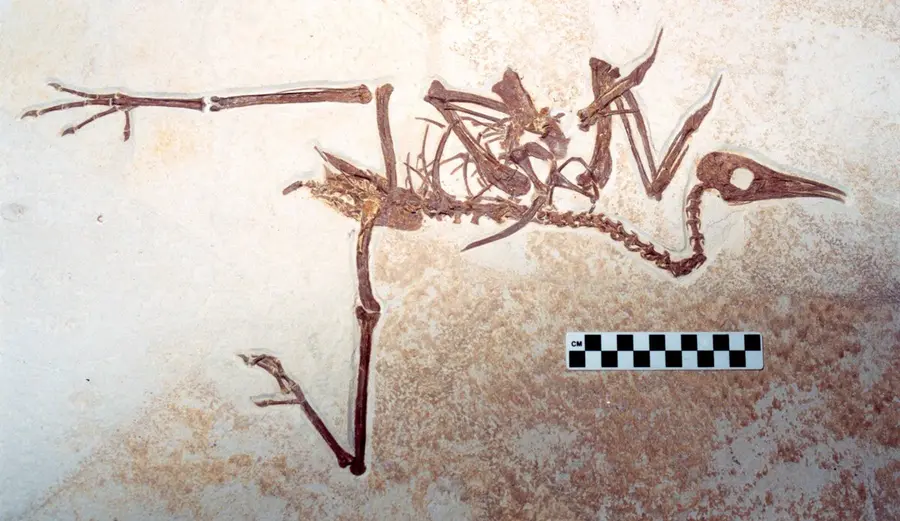
cast of private specimen; alt text: cast of complete bird fossil, legs spread, small black and white ruler underneath
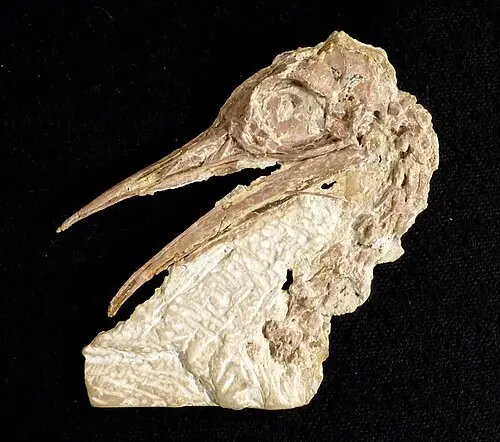
holotype skull, Fossil Butte Member, Lincoln County
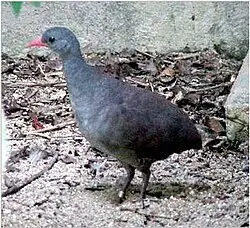
modern analog: Crypturellus; catalog modern_analog: "Crypturellus (tinamou)"
PhyloPic silhouette; depicts Lithornis (stand-in for Pseudocrypturus cercanaxius)
3D models
same clade (palaeognaths; tinamou analog): Thicket tinamou
- Description
- Tinamou-like lithornithid (palaeognath); short wings and limbs, rudimentary tail
- Group
- Bird
- Size
- cranium 95.6 mm; humerus 84 mm; tarsometatarsus 48 mm
- Habitat
- seasonal forest near water; ground forager
- Diet
- insects, berries, seeds by rooting and probing (inferred)
- Abundance
- lithornithids are about the third most abundant large FBM birds; all from nearshore deposits
- Modern relative
- Crypturellus (tinamou)
- Notes
- Holotype skull from Tynsky Quarry; near-complete referred skeleton (private, cast USNM). Also referred from the London Clay. NPS interprets it as a long-legged shoreline wader - a park interpretation. Grande 2013 also figures an undescribed Pseudocrypturus sp. from the sandwich beds of Locality H (per grande_taxon_list.csv; not seen by this compiler).
Sources
- Houde, P. 1988. Paleognathous birds from the early Tertiary of the Northern Hemisphere. Publications of the Nuttall Ornithological Club 22., pp.36, 51 ↗
- Nesbitt, S.J. & Clarke, J.A. 2016. The anatomy and taxonomy of the exquisitely preserved Green River Formation (early Eocene) lithornithids (Aves) and the relationships of Lithornithidae. Bulletin AMNH 406:1–91., pp.10, 31 ↗
- National Park Service, Fossil Butte National Monument 2025. Fossil Bird Species. nps.gov/fobu, last updated September 26, 2025; accessed 2026-10-05. ↗