Protorohippus venticolus
Also published as: Hyracotherium venticolum; Eohippus venticolus
This entry was compiled from research notes and has not yet been reviewed by a person. Its facts come from the sources listed below, which are the authority if anything here disagrees with them.
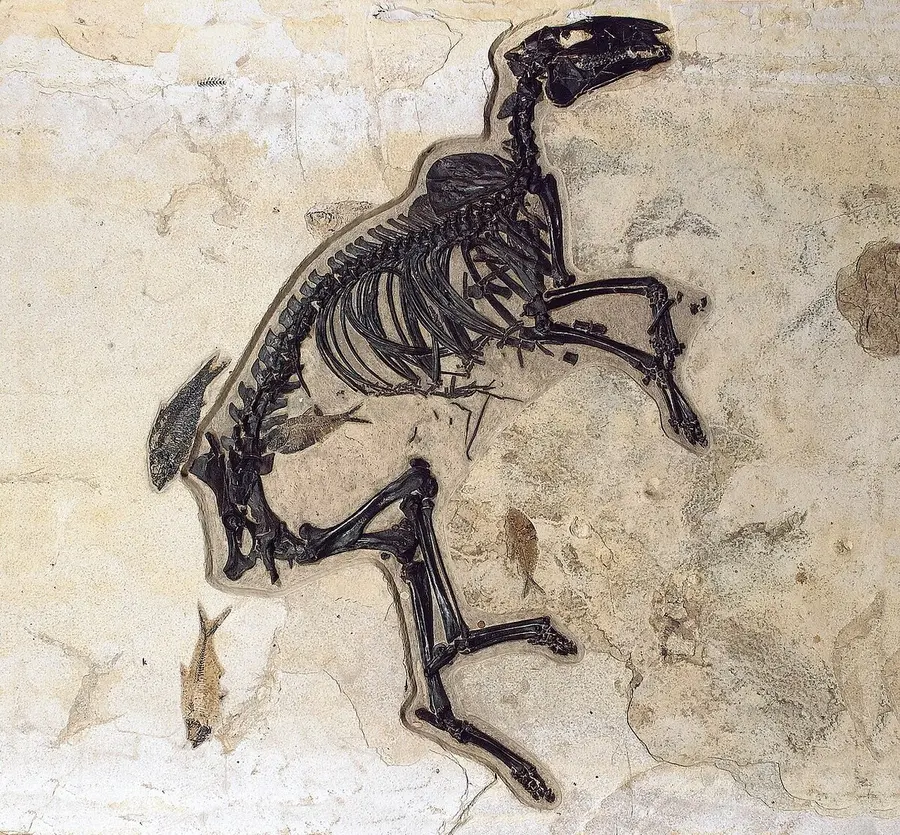
FBM specimen (labelled Protorohippus sp.)
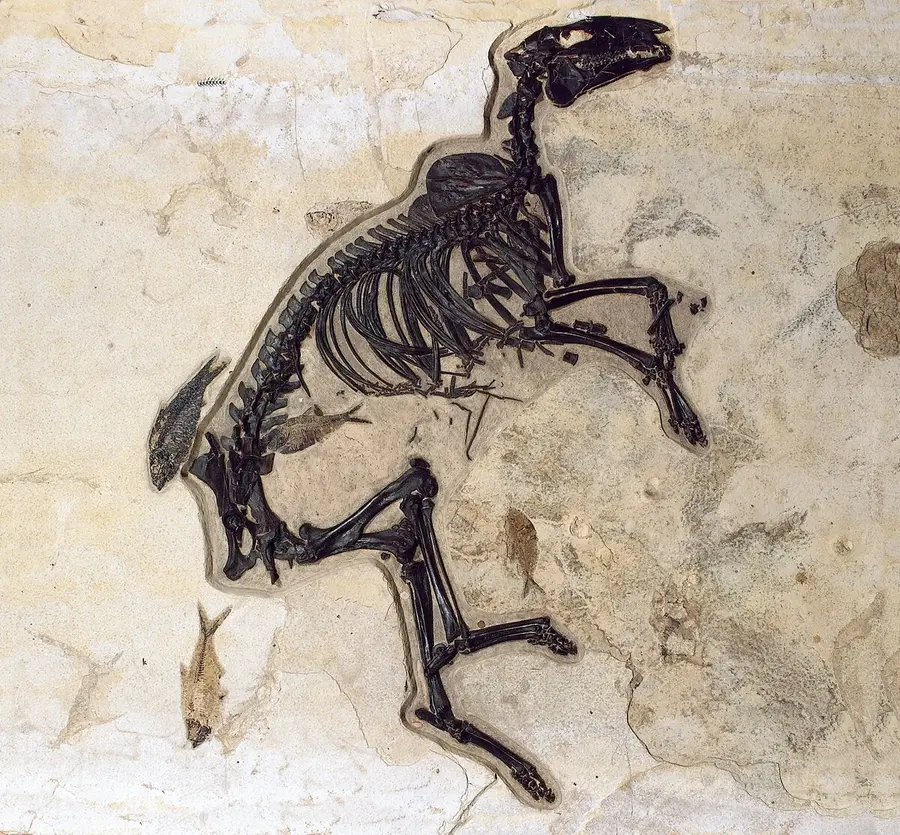
cast of private specimen; alt text: Protorohippus venticolus horse fossil surrounded by fish fossils. From Green River Formation.
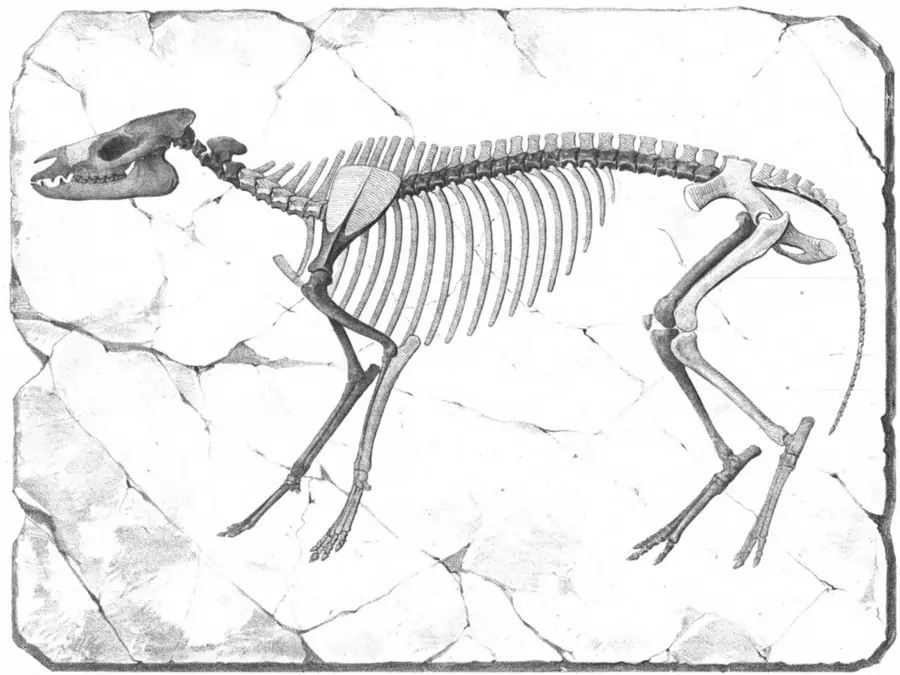
Cope 1884 skeletal reconstruction based on Wind River Fm specimen AMNH 4832
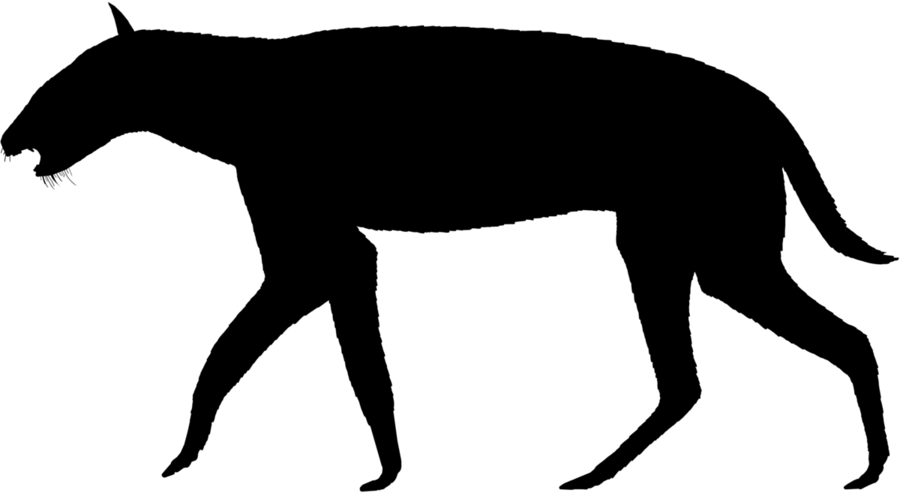
PhyloPic silhouette; depicts Eohippus angustidens (stand-in for Protorohippus venticolus)
3D models
same family (cast): Hyracotherium vasacciense skull & leg cast
same family (reconstruction): Eohippus life model · check accuracy
- Description
- Dawn horse (Equidae); four toes in front, three behind; long head, slim body, long hind legs (jumper)
- Group
- Mammal
- About the name
- Cope named this dawn horse Hyracotherium venticolum in 1881, using a Latin adjective (roughly 'wind-dweller', after Wyoming's Wind River beds) with the neuter ending to match Hyracotherium. Zoological naming rules require such adjectives to change their ending when a species moves to a genus of a different gender, so in the masculine genus Protorohippus it becomes venticolus, the form used by Wortman (who created the genus in 1896) and by Fossil Butte National Monument. Many recent papers, including Froehlich (2002) and Gunnell and colleagues (2016), and the Paleobiology Database keep the original spelling venticolum; both refer to the same animal.
- Size
- 33 cm at shoulder; head 150 mm
- Habitat
- forest and shore
- Diet
- leaves, fruit (inferred)
- Abundance
- two skeletons (one nearshore, one mid-lake)
- Modern relative
- Muntiacus (muntjac) or Tragulus (chevrotain), as size and body stand-in
- Notes
- Mid-lake specimen is the most complete dawn-horse skeleton known (NPS).
Sources
- National Park Service, Fossil Butte National Monument 2025. Fossil Mammal Species. nps.gov/fobu, last updated September 26, 2025; accessed 2026-10-05. ↗
- Grande, L. 2013. The Lost World of Fossil Lake: Snapshots from Deep Time. Univ. Chicago Press, xi + 425 pp. (catalogue record; publisher says 432 pp.), 243 colour plates. ISBN 9780226922966 / ebook 9780226922980., p.271 ↗
- Cope, E.D. 1881. On the Vertebrata of the Wind River Eocene beds of Wyoming. Bulletin of the United States Geological and Geographical Survey of the Territories 6 (1): 183–202., p.198 ↗
- Wortman, J.L. 1896. Species of Hyracotherium and allied perissodactyls from the Wahsatch and Wind River beds of North America. Bulletin of the American Museum of Natural History 8: 81–110., p.105 ↗
- Froehlich, D.J. 2002. Quo vadis eohippus? The systematics and taxonomy of the early Eocene equids (Perissodactyla). Zoological Journal of the Linnean Society 134: 141–256. ↗