Plecia pealei
This entry was compiled from research notes and has not yet been reviewed by a person. Its facts come from the sources listed below, which are the authority if anything here disagrees with them.
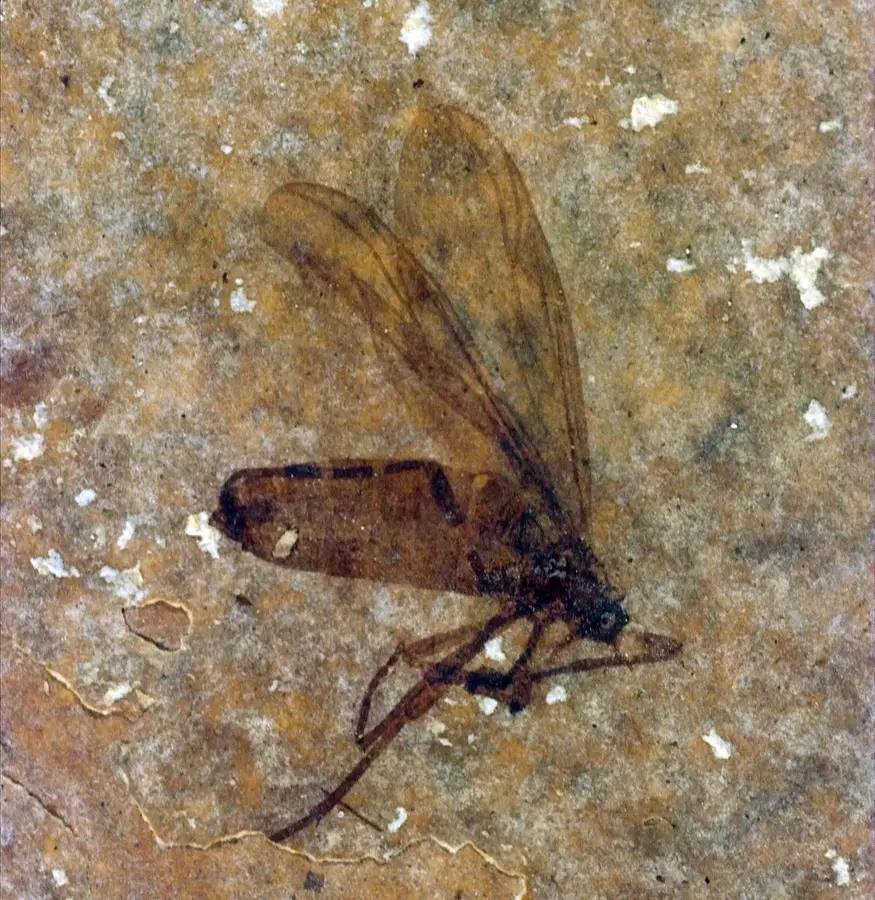
FOBU11292; alt text: Plecia pealei March fly fossil viewed from side with wings extended above and legs extended below. From Green River Formation.
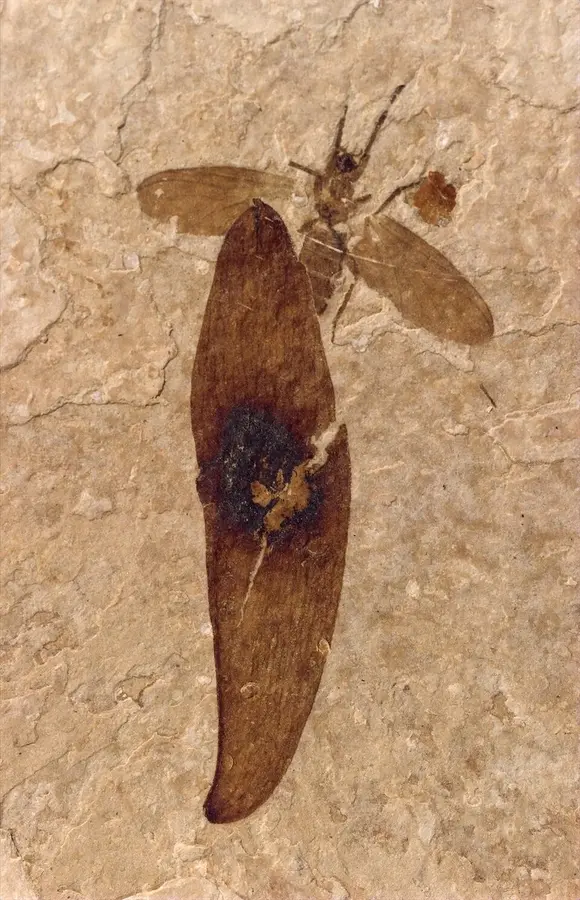
with Ailanthus seed
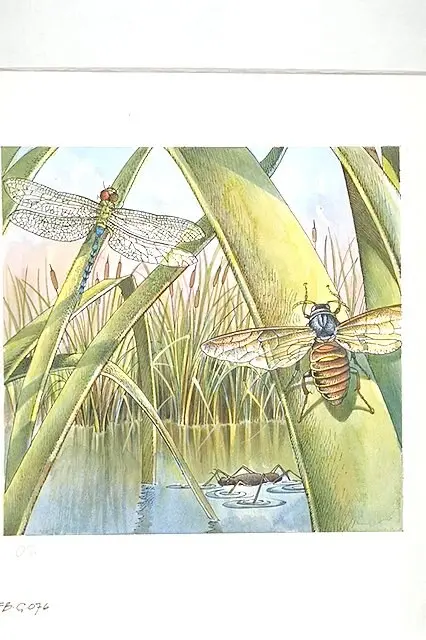
March fly and dragonfly on cattail leaves, water strider on water; NPGallery: "Government owns art and all reproduction rights"; 01/01/1990 - 12/30/1990; Image_Size=8" x 9-1/4"; Count:8/19; Exhibit 10/Graphic # FB-G-076(10)
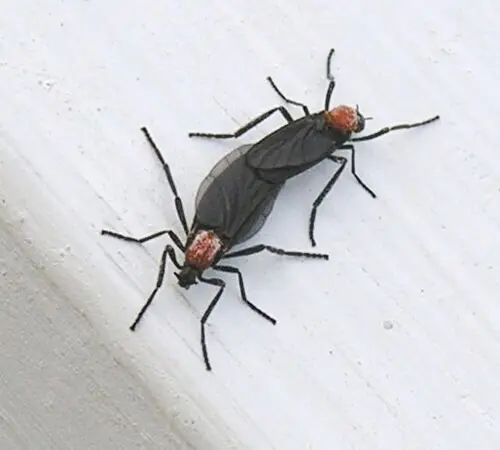
modern analog: Plecia nearctica (Lovebug); catalog modern_analog: "Plecia nearctica (lovebug)"
PhyloPic silhouette; depicts Plecia nearctica (stand-in for Plecia pealei)
- Description
- March fly (Bibionidae)
- Group
- Insect
- Size
- body ~11 mm, wing ~10 mm
- Habitat
- terrestrial; mating swarms fell onto the lake
- Diet
- adults on nectar/pollen (inferred)
- Abundance
- dominant insect: 80-96% of insects; >90% of FBM insects are flies
- Modern relative
- Plecia nearctica (lovebug)
- NPS quarry
- 1 specimens, 1998–2020 (Logged as "Plecia")
- Notes
- Most abundant in the oil shale 'bottom capping layer' under the 18-inch layer (T12; G84).
Sources
- Scudder, S.H. 1890. The Tertiary Insects of North America. Report of the US Geological Survey of the Territories 13., p.585 ↗
- Grande, L. 1984. Paleontology of the Green River Formation, with a review of the fish fauna (2nd ed.). Geological Survey of Wyoming Bulletin 63, 333 p., p.169 ↗
- National Park Service, Fossil Butte National Monument 2025. Fossil Arthropod Species. nps.gov/fobu, last updated September 26, 2025; accessed 2026-10-05. ↗
- Tweet, J.S., Santucci, V.L., Connors, T. & Kenworthy, J.P. 2012. Paleontological resource inventory and monitoring: Northern Colorado Plateau Network. NPS Natural Resource Technical Report NPS/NCPN/NRTR-2012/585 (FOBU chapter pp.363–378). ↗