Gallinuloides wyomingensis
This entry was compiled from research notes and has not yet been reviewed by a person. Its facts come from the sources listed below, which are the authority if anything here disagrees with them.
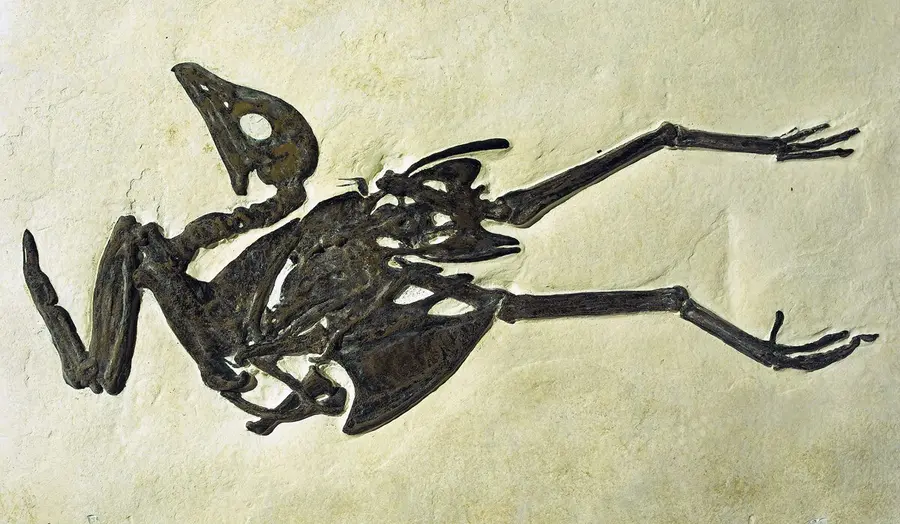
cast of MCZ 342221; alt text: cast of fossil bird on its side with long legs and long neck, bent neck and one visible wing
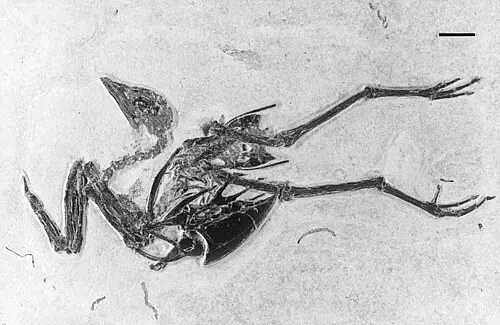
holotype MCZ 342221 (Mayr & Weidig 2004)
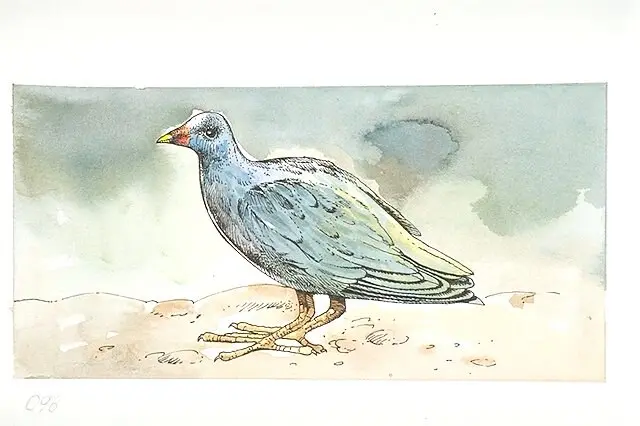
NPGallery: "Government owns art and all reproduction rights"; 01/01/1990 - 12/30/1990; Image_Size=9-3/8" x 6-1/16"; Count:9/19; Exhibit 11/Graphic # FB-G-096(11)
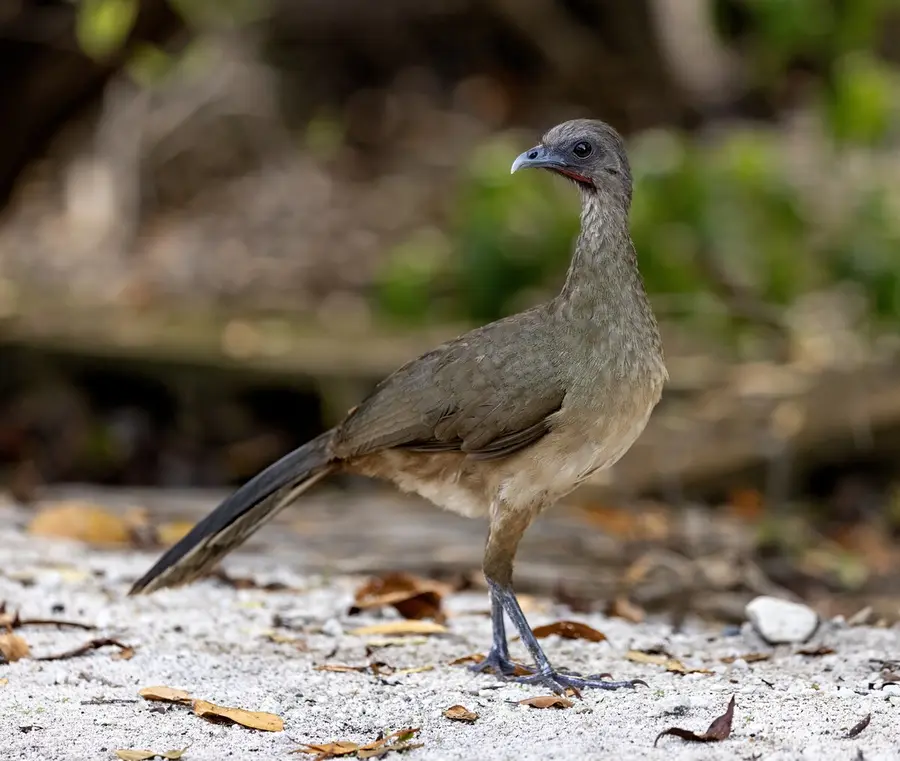
modern analog: Ortalis vetula (Plain chachalaca); catalog modern_analog: "Ortalis vetula (plain chachalaca)"
PhyloPic silhouette; depicts Ortalis cinereiceps (stand-in for Gallinuloides wyomingensis)
3D models
same order (Galliformes; cracid): Black curassow Crax alector
- Description
- Stem landfowl (Gallinuloididae); small skull, short beak, powerful wings
- Group
- Bird
- Size
- about 25 cm; smaller than a ruffed grouse; humerus ~47 mm
- Habitat
- forest; found in nearshore and mid-lake deposits
- Diet
- fruit and seeds (inferred from relatives)
- Abundance
- rare
- Modern relative
- Ortalis vetula (plain chachalaca)
- Notes
- First bird described from the Green River Formation; oldest known galliform per NPS. Humerus most like the megapode Leipoa (W10). An undescribed Gallinuloides sp. (~25 cm tall) from F-2 is in a private collection (G84 p.214).
Sources
- Mayr, G. & Weidig, I. 2004. The Early Eocene bird Gallinuloides wyomingensis, a stem group representative of Galliformes. Acta Palaeontologica Polonica 49:211–217. ↗
- Weidig, I. 2010. New birds from the lower Eocene Green River Formation, North America. Records of the Australian Museum 62:29–44. ↗
- Grande, L. 1984. Paleontology of the Green River Formation, with a review of the fish fauna (2nd ed.). Geological Survey of Wyoming Bulletin 63, 333 p., pp.204, 210 ↗
- National Park Service, Fossil Butte National Monument 2025. Fossil Bird Species. nps.gov/fobu, last updated September 26, 2025; accessed 2026-10-05. ↗