Fish coprolites
This entry was compiled from research notes and has not yet been reviewed by a person. Its facts come from the sources listed below, which are the authority if anything here disagrees with them.
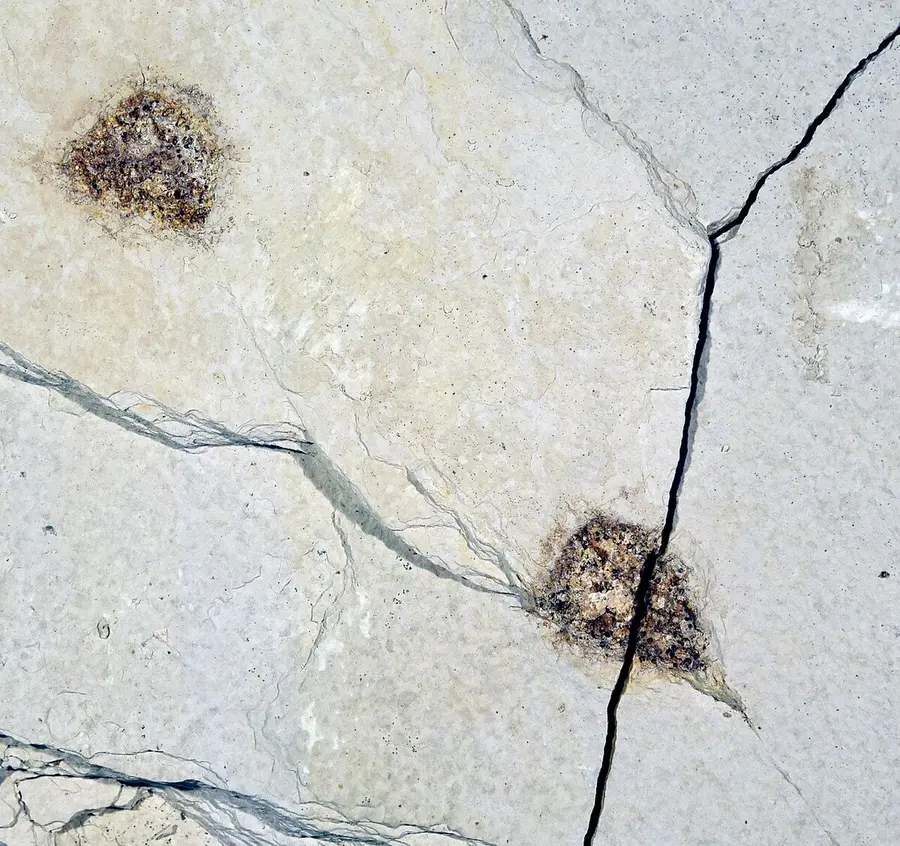
two coprolites
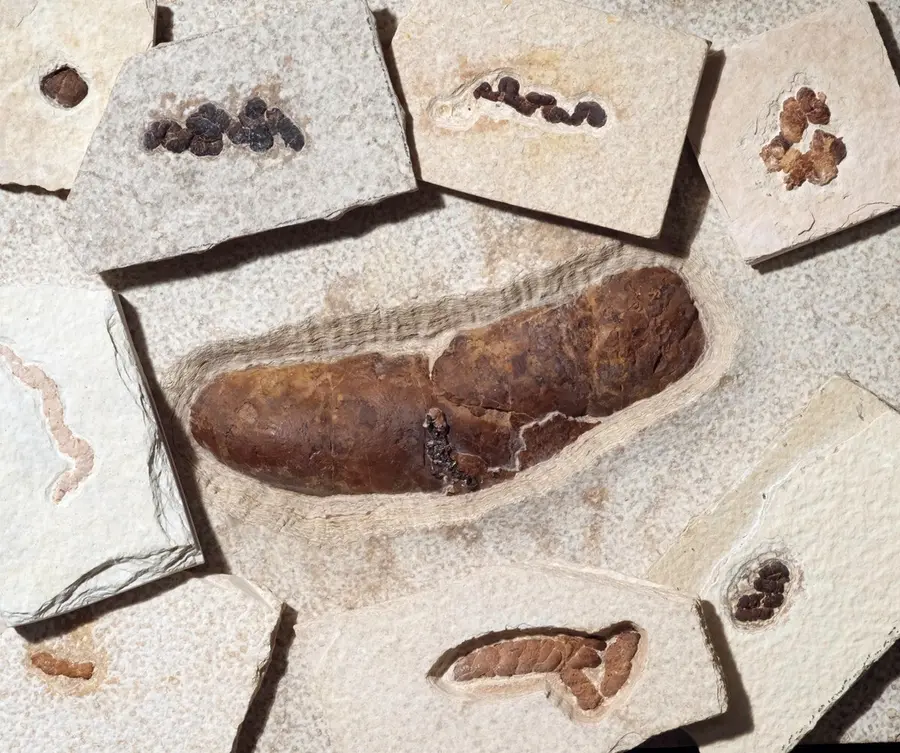
assorted coprolites; alt text: One large oblong fossil poo surrounded by eight poops on smaller rocks. Some of the smaller poops are stringy, some are more circular.
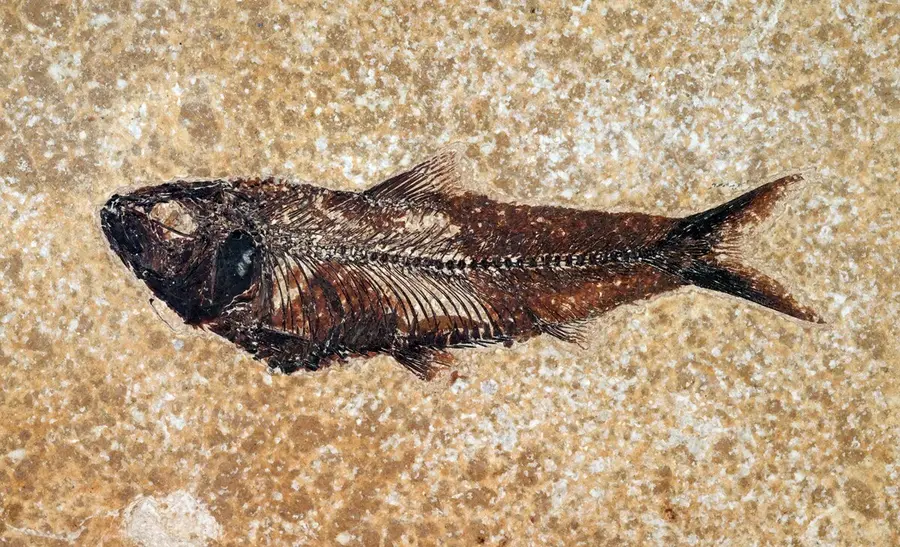
Knightia eocaena with colonite (coprolite inside the body), FOBU17646; alt text: Knightia eocaena with colonite. A long, thin fish fossil with a forked tail. There is an oblong shape inside the fish in the middle, right at the bottom.
- Description
- Fossil fish feces: small rope-shaped coprolites without bones (probably from small herring) and drop-shaped coprolites containing fish bones (carnivores); mostly apatite
- Group
- Trace fossil
- Size
- rope-shaped: small; drop-shaped: various sizes (8-inch coprolites likely crocodilian or turtle per NPS)
- Habitat
- lake floor (all zones)
- Abundance
- extremely common, particularly at F-1; coprolites called the most abundant fossils in Fossil Lake rocks (A. Aase in T12) or the second most common (Lucas et al. 2026)
- NPS quarry
- 516 specimens, 1998–2020 (Logged as "Fish")
- Notes
- Delicate coprolites show the fish lived in the calm lake rather than washing in from streams (NPS). A Knightia with a coprolite still in its colon (a 'colonite') is known (FOBU17646, NPS). Useful as lake-floor set dressing.
Sources
- Grande, L. 1984. Paleontology of the Green River Formation, with a review of the fish fauna (2nd ed.). Geological Survey of Wyoming Bulletin 63, 333 p., p.163 ↗
- National Park Service, Fossil Butte National Monument 2025. Coprolites. nps.gov/fobu, last updated September 26, 2025; accessed 2026-10-05. ↗
- Tweet, J.S., Santucci, V.L., Connors, T. & Kenworthy, J.P. 2012. Paleontological resource inventory and monitoring: Northern Colorado Plateau Network. NPS Natural Resource Technical Report NPS/NCPN/NRTR-2012/585 (FOBU chapter pp.363–378). ↗
- Lucas, S.G., Hunt, A.P., Simpson, E.L. & Rinehart, L.F. 2026. An isolated fish skull from the nonmarine Eocene of Wyoming, USA: a case study in evaluating a possible regurgitalite. Fossil Studies 4(2):11. ↗