Chaneya tenuis
Also published as: Astronium truncatum; Porana speirii
This entry was compiled from research notes and has not yet been reviewed by a person. Its facts come from the sources listed below, which are the authority if anything here disagrees with them.
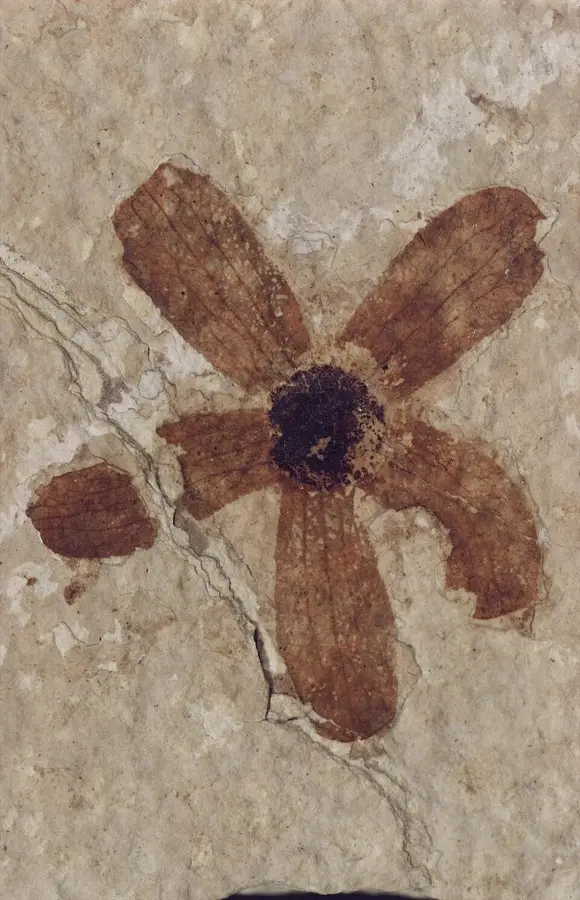
FOBU11466
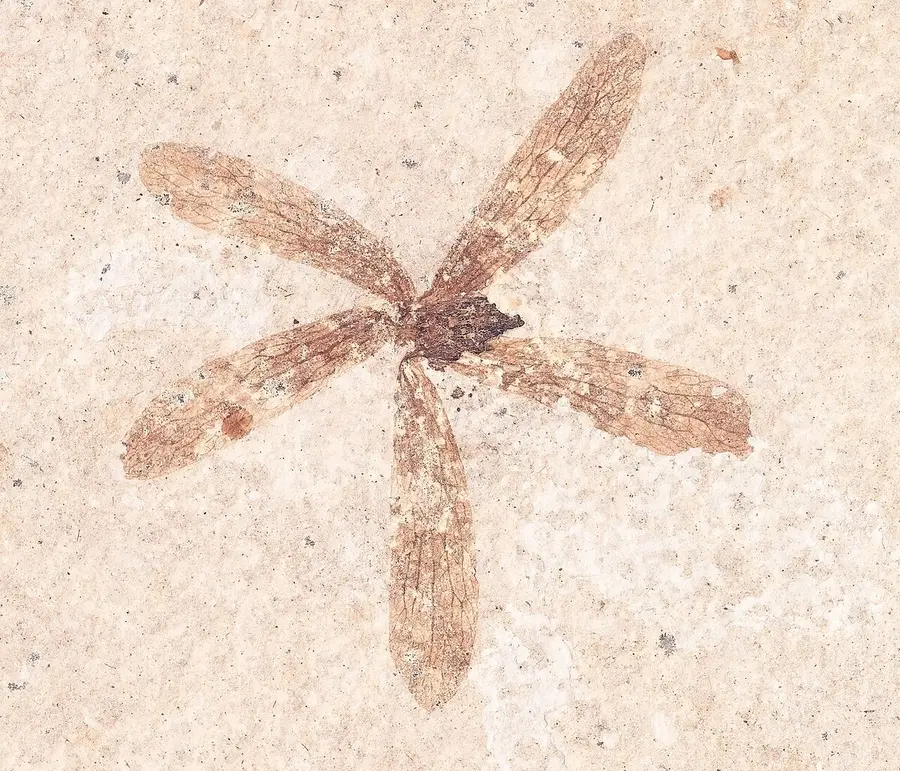
labelled Astronium (= Chaneya) fruit
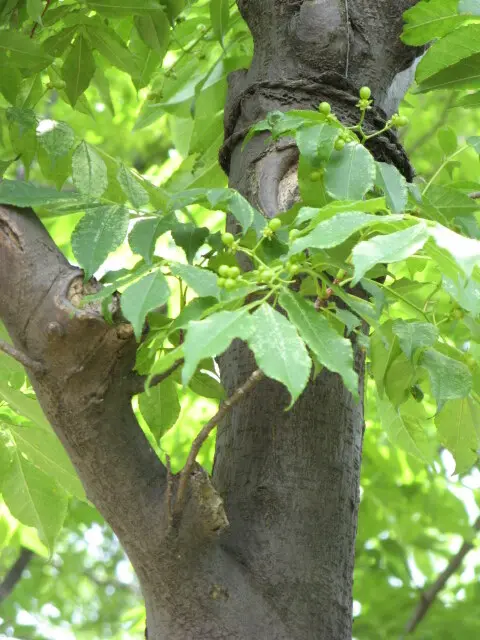
modern analog: Picrasma; catalog modern_analog: "Picrasma (Simaroubaceae)"
- Group
- Eudicots
- Form
- tree or shrub with wind-dispersed five-winged fruit
- Known from
- fruit with persistent five-parted calyx (often mistaken for a flower)
- Habitat
- forest; fruits blown into the lake
- Abundance
- on display; 'Astronium truncatum' observed at F-1
- Modern relative
- Picrasma (Simaroubaceae)
- Occurrence
- Fossil Lake (FOBU11466; F-1 as Astronium truncatum; Fossil, Wyo. as Porana speirii); Lake Uinta (as Astronium truncatum); also Florissant, Clarno, British Columbia, China
- Notes
- Wang & Manchester (2000) report that fossils formerly placed in Porana and Astronium belong to Chaneya; assigning the specific Fossil Wyo. and F-1 specimens to C. tenuis follows that synonymy. Locality caveat: Grande (1984) says Brown's 1936 Fossil Lake plants are 'probably F-1', but Tweet et al. (2012, citing Grande 1980) warn that Brown's 1936 floras may come from mixed locations.
Sources
- National Park Service, Fossil Butte National Monument 2025. Fossil Plant Species. nps.gov/fobu, last updated September 26, 2025; accessed 2026-10-05. ↗
- Grande, L. 1984. Paleontology of the Green River Formation, with a review of the fish fauna (2nd ed.). Geological Survey of Wyoming Bulletin 63, 333 p., p.262 ↗
- Brown, R.W. 1936. Additions to some fossil floras of the western United States. USGS Professional Paper 186-J. ↗
- Grande, L. 1984. Paleontology of the Green River Formation, with a review of the fish fauna (2nd ed.). Geological Survey of Wyoming Bulletin 63, 333 p., Table V.1 ↗
- Wang, Y.-F. & Manchester, S.R. 2000. Chaneya, a new genus of winged fruit from the Tertiary of North America and eastern Asia. Int. J. Plant Sci. 161:167–178. ↗